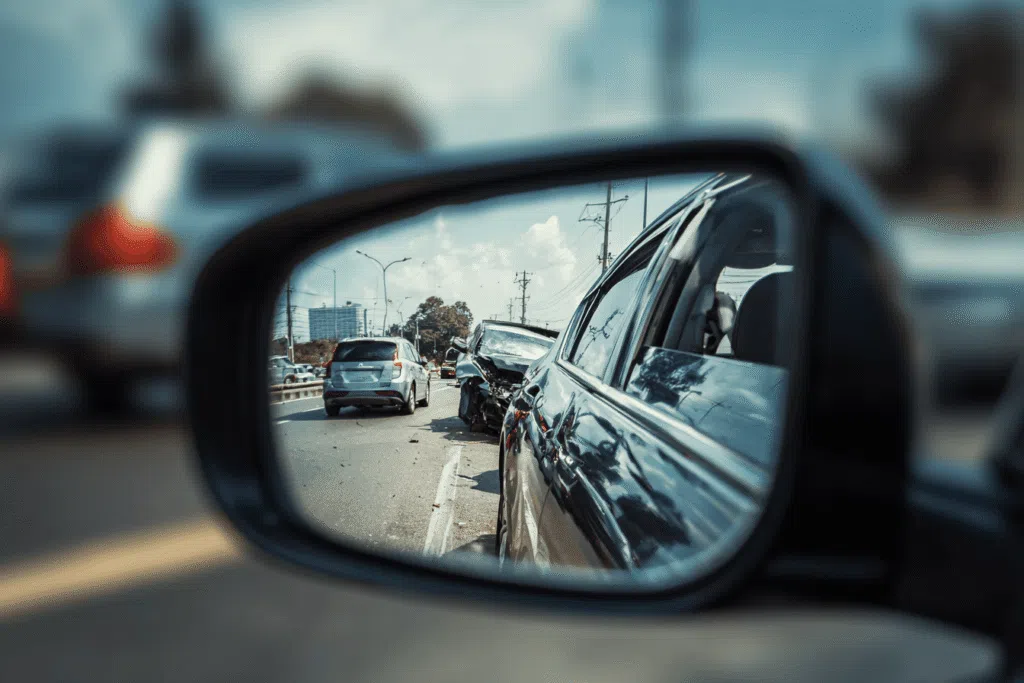
The most common types of car accidents in Bakersfield are rear-end collisions, intersection T-bone crashes, and multi-vehicle pileups. Rear-end crashes frequently occur in heavy traffic, while T-bone accidents happen at busy intersections. Chain-reaction collisions are common on Highway 99 and Highway 58. Head-on, sideswipe, rollover, pedestrian, and hit-and-run crashes also regularly cause serious injuries.
Car accidents in Bakersfield can leave victims confused and overwhelmed, especially when the crash type affects liability and insurance outcomes. Rear-end collisions often seem minor but can cause serious neck and back injuries. T-bone crashes at intersections can lead to significant vehicle damage and traumatic injuries. Head-on collisions, chain-reaction pileups, and sideswipe crashes each create unique patterns of harm and legal challenges.
Without understanding the most common types of accidents and how they occur, victims may misinterpret fault, delay medical care, or accept low settlement offers. Insurance companies often use confusion about accident types to reduce payouts or assign shared blame.
In this article, you will discover the most common types of car accidents in Bakersfield, why they happen, what injuries they typically cause, and how a Bakersfield car accident attorney can help you pursue full and fair compensation.
What Car Accidents Are Most Common in Bakersfield?
Bakersfield experiences several distinct types of car accidents due to its busy intersections, agricultural traffic, and major highways such as Highway 99 and Highway 58. Understanding these accident types helps you stay alert and know your rights if you’re injured.
The most frequent crashes involve rear-end collisions, intersection accidents, and multi-vehicle pileups. Each type has different causes and creates unique challenges for proving fault and recovering compensation.
Rear End Collisions in Bakersfield
A rear-end collision happens when one vehicle strikes another from behind. This is the most common type of accident on Bakersfield roads, especially in congested areas like Ming Avenue and Stockdale Highway during rush hour.
California law typically presumes the rear driver is at fault, but there are exceptions. These crashes often occur due to:
- Following too closely: Not maintaining a safe distance in heavy traffic.
- Distracted driving: Texting or adjusting the radio at stoplights.
- Sudden stops: Abrupt braking on Highway 99 off-ramps.
Even at low speeds, rear-end crashes can cause serious whiplash and soft tissue injuries. The impact forces your head and neck to snap forward and backward violently.
Broadside Side Impact Crashes at Intersections
A broadside collision is when the front of one vehicle strikes the side of another, forming a “T” shape. These T-bone accidents are particularly dangerous because vehicle sides offer limited protection to occupants.
Most broadside crashes, also known as T-bone accidents, happen at busy Bakersfield intersections like Coffee Road and Rosedale Highway. They typically occur when one driver fails to yield the right-of-way or runs a red light.
The force of impact often pushes the struck vehicle into other lanes or off the road. Passengers on the impact side face the highest risk of severe injuries.
Head-On Collisions on Local Corridors
Head-on collisions involve two vehicles traveling in opposite directions that crash head-on. These are among the most devastating accidents, often resulting in catastrophic injuries or death.
They frequently occur on undivided roads, such as portions of Highway 58, when drivers cross the center line. Common causes include impaired driving, fatigue, or attempting to pass on two-lane roads.
The combined speed of both vehicles makes these crashes extremely violent. Even with modern safety features, survival rates are lower than those of other accident types.
Sideswipe and Lane Change Crashes
A sideswipe accident happens when two vehicles traveling parallel make contact along their sides. These crashes are common on multi-lane roads like California Avenue during heavy traffic.
California Vehicle Code § 22107 requires drivers to signal and ensure lane changes can be made safely. Most sideswipes result from:
- Blind spot failures: Not checking mirrors before changing lanes.
- Improper signaling: Changing lanes without warning other drivers.
- Aggressive driving: Weaving through traffic at high speeds.
While often less severe than other types of crashes, sideswipes can cause drivers to lose control and hit other vehicles or barriers.
Multi-Vehicle Pileups on Highway 99 and Highway 58
Chain-reaction crashes involve three or more vehicles and create complex liability situations. Bakersfield’s position along major trucking routes increases the risk of these devastating accidents.
Tule fog conditions can trigger massive pileups when visibility drops to just a few feet. The first collision often causes a domino effect as the following vehicles cannot stop in time.
Determining fault becomes complicated when multiple drivers and insurance companies are involved. Each driver’s actions must be analyzed separately to assign responsibility percentages.
Single Vehicle Crashes and Road Hazards
Not all accidents involve other drivers. Single-vehicle crashes can result from dangerous road conditions, mechanical failures, or driver error.
You might still have a valid claim even without another driver involved. Potential liable parties include:
- Government entities: For dangerous road conditions or missing signage.
- Auto manufacturers: For defective parts that cause crashes.
- Construction companies: For improperly maintained work zones.
These cases require thorough investigation to identify all responsible parties and maximize your recovery.
Rollover Accidents in Bakersfield
A rollover occurs when a vehicle tips onto its side or roof. SUVs and trucks face a higher risk of rollover due to their higher center of gravity.
Common triggers include sharp turns at high speed, overcorrection after leaving the roadway, or tire blowouts. The risk of severe injury is high due to potential roof crush and ejection from the vehicle.
Modern vehicles have rollover protection systems, but these accidents remain among the most dangerous. Wearing seatbelts significantly improves survival chances.
Hit and Run Crashes and What to Do Next
A hit-and-run is when a driver leaves the accident scene without providing information or rendering aid. California Vehicle Code § 20001 makes this a felony when injuries occur.
If you’re a hit-and-run victim, you can still recover compensation through your uninsured motorist coverage. This insurance protects you when the at-fault driver cannot be identified or lacks insurance.
Always report hit-and-run accidents to the police immediately. Witness statements and surveillance footage may help identify the fleeing driver.
Pedestrian and Bicycle Collisions in Bakersfield
Bakersfield ranks among California’s most dangerous cities for pedestrians and cyclists. Most accidents occur at dawn or dusk when visibility is poor.
Drivers must yield to pedestrians in crosswalks and check bike lanes before turning. A moment of inattention can cause life-altering injuries to vulnerable road users.
These cases often result in severe injuries due to the lack of protection for pedestrians and cyclists. Compensation claims typically involve significant medical expenses and long-term care needs.
Where Do Bakersfield Crashes Happen Most?
Understanding accident hotspots helps you drive more defensively and anticipate dangerous situations. Traffic volume, road design, and driver behavior all contribute to crash frequency at specific locations.
High-Risk Intersections Across Bakersfield
Certain intersections see disproportionately high accident rates due to heavy traffic and complex signal timing. The most dangerous locations consistently include:
- Coffee Road and Rosedale Highway: Heavy commercial and residential traffic.
- Ming Avenue and New Stine Road: Multiple lanes and turning movements.
- California Avenue and Chester Avenue: High-speed arterial intersection.
- Union Avenue and California Avenue: Complex traffic patterns.
These intersections combine high traffic volume with multiple conflict points where vehicles cross paths. Poor visibility and aggressive driving increase the risk of accidents.
Freeway and Highway Segments with Frequent Crashes
Highway 99 through Bakersfield serves as a major collision corridor due to heavy truck traffic and high speeds. The mixing of local and through traffic creates dangerous conditions.
The Grapevine section of Interstate 5 presents unique challenges with steep grades and sudden weather changes. Trucks often lose control on downhill sections, causing serious accidents.
Highway 58 sees frequent crashes related to high speeds and driver fatigue. The transition from urban to rural sections can catch drivers off guard.
Peak Days and Times for Bakersfield Crashes
Accident patterns follow predictable traffic flow cycles. Wednesday through Saturday see the highest crash rates, with Friday evenings being particularly dangerous.
Rush-hour periods from 7-9 AM and 4-6 PM see the most collisions. Weekend nights also show increased accident rates due to impaired driving.
Understanding these patterns helps you plan safer travel times and stay extra alert during high-risk periods.
What Causes These Bakersfield Crashes?
Most car accidents result from preventable human errors rather than mechanical failures or road conditions. Identifying common causes helps you avoid becoming a victim.
Distracted Driving Across Intersections and Highways
Distracted driving means any activity that takes your attention from the road. This includes texting, eating, adjusting the GPS, or talking to passengers.
California’s hands-free law prohibits holding phones while driving, but many drivers still violate this rule. Even hands-free devices can create dangerous mental distractions.
A momentary distraction while driving at highway speeds can leave you effectively blind to the road ahead.
Speeding and Aggressive Driving Risks
Bakersfield’s long, straight roads encourage speeding, which reduces reaction time and increases crash severity. Higher speeds make it harder to stop for unexpected hazards.
Aggressive driving behaviors compound speeding risks and include:
- Tailgating: Following too closely to intimidate other drivers.
- Unsafe lane changes: Weaving through traffic without signaling.
- Road rage: Intentionally dangerous driving due to anger.
These behaviors often trigger chain reactions that cause multi-vehicle accidents.
DUI and Impaired Driving
Driving under the influence remains a serious problem in Kern County despite strict enforcement. Alcohol and drugs impair judgment, coordination, and reaction time.
California’s legal limit is 0.08% blood alcohol content, but impairment begins at lower levels. Even prescription medications can affect driving ability.
Impaired drivers often cause head-on collisions by crossing center lines or driving the wrong way on freeways. These crashes frequently result in fatalities.
Weather and Tule Fog Conditions
Tule fog is dense ground fog unique to the Central Valley that can reduce visibility to mere feet. It forms quickly during the winter months, creating extremely dangerous driving conditions.
Proper fog driving techniques include using low beams, reducing speed, and increasing following distance. Many drivers fail to adjust their behavior appropriately.
Multi-vehicle pileups on Highway 99 often result from fog, as drivers maintain normal speeds despite poor visibility.
Road Design and Construction Defects
Sometimes the road itself contributes to accidents through poor design or maintenance. Common hazardous conditions include:
- Inadequate lighting: Rural intersections without proper illumination.
- Faded markings: Unclear lane divisions on older roads.
- Poor drainage: Standing water during rare but intense rains.
- Construction zones: Sudden lane changes and reduced speeds.
Government entities may be liable when dangerous road conditions cause accidents.
Who Is at Fault in These Common Crash Types?
Determining fault affects your ability to recover compensation for injuries and damages. California uses comparative negligence, meaning you can still recover even if partially at fault.
Rear-End Presumptions and Exceptions
California law presumes the rear driver caused a rear-end collision, but this presumption can be challenged. Exceptions include when the front driver suddenly stops without cause or when the brake lights are non-functioning.
Dashcam footage often proves these exceptions by showing the front driver’s actions before impact. Insurance companies may try to deny valid exception claims.
Your percentage of fault directly reduces your compensation under California’s comparative negligence system.
Left Turns and Right-of-Way at Intersections
Vehicle Code § 21801 requires left-turning drivers to yield to oncoming traffic unless they have a protected green arrow. The turning driver typically bears fault for intersection crashes.
Fault can shift if the oncoming vehicle was speeding excessively or ran a red light. Traffic signal timing and vehicle speeds become crucial evidence.
Witness statements and traffic camera footage help prove which driver had the right-of-way at the time of impact.
Unsafe Lane Changes and Sideswipes
Vehicle Code § 22107 requires drivers to signal lane changes and ensure they can be made safely. The driver changing lanes typically bears fault for sideswipe accidents.
However, fault can be shared if the other driver was in a blind spot or if the other driver accelerated to prevent the lane change. Vehicle damage patterns help reconstruct how the collision occurred.
Establishing which driver had the right-of-way in the lane is crucial to determining liability percentages.
Multi-Vehicle Chain Reaction Liability
Pileup accidents require analyzing each driver’s actions separately. The driver who caused the initial impact doesn’t automatically bear full liability for subsequent collisions.
The following drivers must maintain safe distances and speeds for conditions. Failure to do so can result in shared fault even if they didn’t cause the first crash.
Insurance companies often dispute fault percentages to minimize their payouts in complex multi-vehicle cases.
What Injuries Are Common in These Collisions?
Car accidents can cause a wide range of injuries from minor to life-threatening. Some serious injuries may not show immediate symptoms, making prompt medical evaluation crucial.
Whiplash and Soft Tissue Injuries
Whiplash results from rapid neck movement during impact, commonly in rear-end crashes. The head snaps violently from side to side, straining the neck muscles and ligaments.
Symptoms often don’t appear for 24-48 hours after the accident. Pain, stiffness, and headaches can persist for weeks or months without proper treatment.
Insurance companies often dispute whiplash claims as subjective, making medical documentation essential for recovery.
Brain and Head Injuries
Traumatic brain injuries occur when the head strikes objects or experiences violent motion during crashes. Even mild concussions can have lasting effects on memory and concentration.
Symptoms include headaches, confusion, dizziness, and personality changes. Some effects may not become apparent until days or weeks after the accident.
Brain injuries often require extensive rehabilitation and can permanently affect your ability to work and enjoy life.
Spine and Orthopedic Injuries
High-impact collisions can cause devastating spinal injuries, including herniated discs, compression fractures, and paralysis. These injuries often require surgery and extensive rehabilitation.
Broken bones, torn ligaments, and joint damage are also common in severe crashes. Recovery may take months or years and leave permanent limitations.
The financial impact includes not only medical bills but also lost earning capacity and ongoing care needs.
Fatality and Wrongful Death Claims
Some accidents result in death, leaving families devastated both emotionally and financially. California wrongful death law allows surviving family members to seek compensation.
Recoverable damages include lost financial support, funeral expenses, and loss of companionship. The two-year statute of limitations makes prompt legal action essential.
Wrongful death cases require compassionate legal support during an incredibly difficult time for families.
What Should You Do After Any Bakersfield Crash?
Your actions immediately after an accident can significantly impact your health and legal rights. Even if you feel fine initially, some injuries don’t show symptoms right away.
The steps you take in the first hours and days are crucial for protecting your claim and ensuring proper medical care.
Call 911 and Get Medical Care
Always call 911 for any injury, regardless of how minor it seems initially. Police reports provide crucial documentation, and emergency rooms must treat you regardless of insurance status.
Medical records create an official link between the accident and your injuries. Delaying treatment gives insurance companies ammunition to deny your claim.
Describe all symptoms honestly, including pain, dizziness, or confusion that might indicate serious injuries.
Document the Scene and Vehicles
Take photographs from multiple angles showing vehicle damage, skid marks, and road conditions. Capture traffic signals, street signs, and any visible injuries.
Document weather conditions and lighting that might have contributed to the accident. These details are important evidence of fault.
If you’re too injured to take photos, ask a witness or family member to document everything thoroughly.
Exchange Information and Find Witnesses
Collect driver’s licenses, insurance cards, and vehicle registration from all involved parties. Get contact information for witnesses before they leave the scene.
Witnesses provide unbiased accounts that can counter the other driver’s version of events. Their statements often determine fault when physical evidence is unclear.
Avoid discussing fault or admitting blame, even if you think you might have contributed to the accident.
Report to Insurance Without Admitting Fault
California law requires prompt reporting to your insurance company, but be careful about giving recorded statements without legal counsel. Stick to basic facts about time, location, and vehicles involved.
Insurance adjusters are trained to seek admissions that reduce claim values. They may ask leading questions designed to get you to accept partial blame.
Consider consulting an attorney before giving detailed statements to any insurance company.
Contact a Bakersfield Car Accident Lawyer
Early legal consultation protects your rights and ensures proper evidence preservation. Attorneys can handle insurance communications while you focus on recovery.
We work on a contingency-fee basis, meaning you pay nothing unless we recover compensation. Free consultations allow you to understand your options without financial commitment.
The sooner you contact us, the better we can protect your interests and maximize your recovery.
How Long Do You Have to File a Claim?
California’s statute of limitations sets strict deadlines for filing personal injury lawsuits. Missing these deadlines means losing your right to compensation forever.
You generally have two years from the accident date to file a personal injury lawsuit. Property damage claims have a three-year deadline.
Government entity claims require filing within six months, so immediate action is essential. These shorter deadlines apply when cities, counties, or state agencies might be liable.
Don’t wait to seek legal advice, as evidence disappears and witness memories fade quickly. Early action preserves all your legal options.
How Much Is Your Car Accident Claim Worth?
Claim value depends on multiple factors, including injury severity, impact on your life, and available insurance coverage. Compensation typically includes both economic and non-economic damages.
Economic damages cover measurable financial losses, such as medical bills, lost wages, and property damage. Non-economic damages compensate for pain, suffering, and reduced quality of life.
California’s pure comparative negligence system reduces your recovery by the percentage of fault you bear. For example, a 20% at-fault reduction reduces a $100,000 claim to $80,000.
Insurance policy limits may cap your recovery regardless of actual damages, making uninsured/underinsured motorist coverage crucial protection.
Frequently Asked Questions About Bakersfield Car Accidents
Can I Still Get Compensation If I Was Partially at Fault for the Crash?
Yes, California’s pure comparative negligence law allows recovery even when you share fault for the accident. Your compensation is simply reduced by your percentage of responsibility.
For example, if you’re found 30% at fault for a $50,000 claim, you can still recover $35,000. An experienced attorney works to minimize your percentage of fault and maximize your recovery.
Do I Need a Lawyer If the Other Driver’s Insurance Accepts Full Responsibility?
Even when the fault seems clear, insurance companies often try to minimize payouts through various tactics. They may dispute the extent of your injuries or offer quick settlements before you understand your full damages.
An attorney ensures you receive fair compensation for all current and future losses. We handle all insurance communications so you can focus on recovery without stress.
What If the Other Driver Has No Insurance or Left the Scene?
Your own uninsured/underinsured motorist coverage provides protection when the at-fault driver lacks insurance or cannot be identified. This coverage is optional in California but highly recommended.
We help you navigate the claims process with your own insurance company, which may resist paying valid claims. Hit-and-run cases require prompt police reporting and thorough investigation to identify the fleeing driver.
Contact Kuzyk Personal Injury & Car Accidents Lawyers Today. Free Consultation!
If you’ve been injured in any type of Bakersfield car accident, you don’t have to face the insurance companies alone. Kuzyk Personal Injury & Car Accidents Lawyers has been fighting for accident victims throughout Kern County for decades.
We understand the physical pain, emotional trauma, and financial stress you’re experiencing. Our experienced attorneys know these roads, these insurance companies, and how to fight for maximum compensation.
Our Bakersfield car accident attorneys offer:
- Free consultations: Discuss your case with no obligation or upfront costs.
- Contingency fees: You pay nothing unless we win your case.
- 24/7 availability: Because accidents don’t follow business hours.
- Bilingual services: Full support in English and Spanish.
Don’t let insurance companies pressure you into accepting less than you deserve. California law gives you rights, and we make sure you receive every dollar you’re entitled to recover.
Contact us today to schedule your free consultation. The sooner you call, the sooner we can start building your strongest possible case and protecting your future.