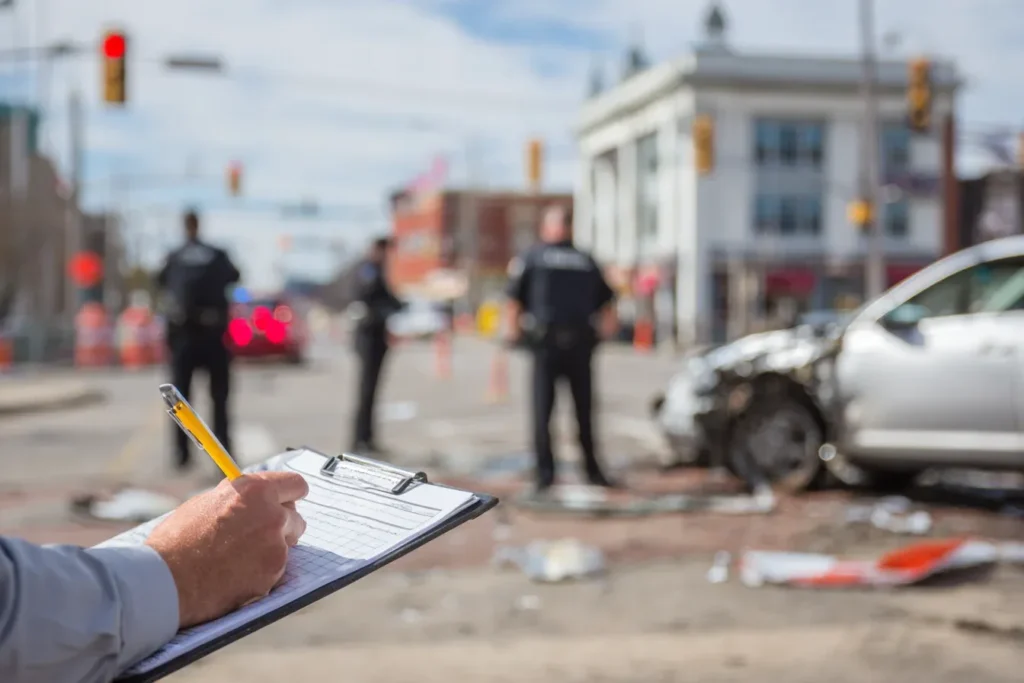
In California, the location of vehicle damage, whether to the rear, front, or side, can be a key indicator of fault in a car accident. Rear damage typically points to a following driver’s negligence, front damage often suggests one driver failed to yield or stop in time, and side damage can indicate a failure to check blind spots or respect right-of-way. Understanding how these damage patterns are interpreted can significantly impact your claim.
After a car accident in California, one of the first things insurance adjusters examine is where the damage appears on the vehicles involved. That damage tells a story, and insurers know how to read it in ways that protect their bottom line. A dent in the wrong place, or a gap in the evidence explaining how it got there, can be used to shift blame onto you and reduce the compensation you are able to recover. For accident victims already dealing with medical bills and lost wages, that outcome can be devastating.
The challenge is that vehicle damage alone does not always tell the complete story. Factors like road conditions, driver statements, witness accounts, and traffic camera footage all play a role in how fault is ultimately assigned. California’s comparative negligence rules mean that even a partial finding of fault against you can directly reduce your payout, making it critical to understand how damage evidence is used and how to counter it.
In this article, you will discover how car accident fault is determined by the location of vehicle damage in California, what common damage patterns mean for your claim, and how a car accident attorney in California can help you build a strong case and pursue the full compensation you deserve.
Why Damage Location Matters in California Claims
When two drivers tell different stories about a crash, the physical damage to each car usually reveals what really happened. Damage location is the specific area where a vehicle made contact, such as the front bumper, rear quarter panel, or driver’s side door.
Insurance adjusters and California courts use these impact patterns as evidence to assign fault percentages. If you’re being blamed unfairly, understanding damage patterns helps you fight back. The dents, scrapes, and crush patterns on your car can prove who caused the accident.
Insurance companies know these damage patterns well. They use them to make quick fault decisions that protect their profits. Learning what your damage means puts you in a stronger position to challenge their conclusions.
Does Damage Location Prove Fault in California?
The damage location provides strong evidence, but California law requires consideration of the complete picture. The state follows “pure comparative negligence,” which means you can recover damages even if partially at fault, just reduced by your percentage of blame.
Damage patterns create presumptions about fault, like rear-end damage suggesting the following driver was at fault. However, other evidence can overcome these assumptions. A clear understanding of how damage connects to the fault helps you protect your rights.
The key evidence types include:
- Physical damage patterns: Show impact angles and force direction.
- Traffic violations: Link damage to specific Vehicle Code sections.
- Supporting evidence: Witness statements, video footage, police reports.
Insurance adjusters often use damage location to assign fault quickly, but they may interpret ambiguous patterns in their company’s favor.
Common Damage Patterns and What They Mean
Different crash types leave distinct damage signatures. Learning to read these patterns helps you understand how an insurance adjuster will view your case.
Rear-End Versus Quarter Panel Hits
Center rear bumper damage indicates a classic rear-end collision where the following driver was too close. This typically means the rear driver violated California Vehicle Code 21703, which requires maintaining a safe following distance.
Rear quarter panel damage tells a different story. This area behind your rear doors gets hit during lane changes or merge collisions. If your left rear quarter panel is damaged and the other car has right front damage, it suggests they moved into your lane while you were already there.
Insurance companies know this difference matters. They’ll assign fault differently depending on whether the impact was center-rear or quarter-panel.
Sideswipe Scrapes and the B-Pillar
The B-pillar is the post between your front and rear doors. Damage behind this pillar usually means you were established in your lane when hit. Damage in front of the B-pillar might suggest you were still moving into the lane.
Scrape direction provides additional clues:
- Horizontal scrapes: Same-direction sideswipe where one car drifted.
- Angled scrapes: One car changing lanes into another’s path.
Paint transfer often accompanies sideswipes and shows which car parts made contact. The color and location of transferred paint can prove who left their lane.
T-Bone Side Damage and Right of Way
T-bone crashes happen when one car’s front hits another’s side, creating a “T” shape. These almost always occur at intersections and involve someone failing to yield the right-of-way.
The location of the damage on the struck vehicle’s side reveals timing. Damage toward the front means the struck car was likely entering the intersection. Damage toward the rear suggests they were already through when hit.
This distinction matters for proving violations of California Vehicle Code 21801, which requires left-turning drivers to yield to oncoming traffic.
Front-End Offset, Undercarriage, and Rollover Clues
Offset damage concentrates on one side of the front rather than being centered. This often indicates turning movements or angled approaches at intersections.
Undercarriage damage shows scrapes or impacts to the vehicle’s bottom. This typically results from loss of control, leading to curb or median contact. For rollovers, roof and pillar damage patterns indicate initial impact direction and speed.
These complex patterns often require expert analysis to interpret correctly.
Where California Law Fits in Fault Decisions
California Vehicle Code sections directly connect certain damage types to specific violations. Understanding these connections helps you see why adjusters assign fault in particular ways.
Following Distance CVC 21703
This law states that drivers must maintain sufficient distance to avoid collisions if the vehicle ahead suddenly stops. Rear-end damage creates a strong presumption that the following driver violated this rule. Limited exceptions exist:
- Lead driver suddenly reverses: Unexpected backward movement.
- Brake light failure: Lead vehicle’s warning system malfunction.
- Unsafe lane change: Lead driver cuts off and immediately brakes.
These exceptions require clear evidence to overcome the presumption of a rear-end collision.
Lane Discipline CVC 21658
This law requires staying in your lane and signaling before moving (CVC 21658). Sideswipe damage patterns often show violations of this rule. Paint transfer location and scrape angles help prove who left their lane improperly.
Failure to check blind spots or drifting over lane lines both violate CVC 21658. The damage pattern usually reveals which driver made the error.
Left Turn Yield CVC 21801
Left-turning drivers must yield to oncoming traffic that poses a hazard. T-bone damage at intersections is typically caused by this violation.
Damage to the turning vehicle’s front corner, combined with side damage to the straight-traveling vehicle, usually establishes the turner’s fault. The impact location proves the oncoming car had the right of way.
How Insurers Misread Damage to Blame You
Insurance adjusters work for their company, not you. They look for ways to interpret damage that reduces their payout. Common tactics include claiming shared fault even when the damage clearly shows otherwise.
For example, they might argue you were “partially at fault” for being in their driver’s blind spot during a lane change. The damage might prove they hit you while you were properly in your lane, but they’ll still try to assign you partial blame.
Never give a recorded statement before consulting an attorney. If an adjuster requests one, use this exact phrase: “I need to speak with my attorney before giving a recorded statement.” You have this right, and using it protects you from saying something that could hurt your case.
Adjusters also push for quick settlements before you understand the full extent of your injuries. These offers often include releases that prevent future claims.
What Evidence Proves Fault Beyond Photos
Evidence disappears quickly after crashes. While damage photos are crucial, supporting evidence often determines whether you win or lose a fault dispute.
Police Reports, Witness Names, and Scene Marks
California police reports include diagrams showing vehicle positions and officer observations, but obtaining one doesn’t satisfy your separate obligation to report your Lancaster auto accident to the California DMV within 10 days if damages exceed $1,000.
The officer’s initial fault assessment carries weight with insurance companies. Key scene evidence includes:
- Skid marks: Show braking points and can help calculate speeds.
- Gouge marks: Indicate exact impact locations in the pavement.
- Debris fields: Reveal force direction and impact severity.
Independent witnesses provide powerful testimony. Get their contact information immediately, as memories fade and people become unavailable. Their accounts often carry more weight than statements from involved drivers.
Dashcams, Traffic Cameras, and Store Video
Video footage provides objective evidence that’s hard to dispute. Potential sources include your own dashcam, other drivers’ cameras, traffic signal cameras, and business security systems.
Surveillance footage from businesses in California can be overwritten after a limited time, so it’s important to request preservation promptly. Attorneys can send preservation letters requiring businesses to save video before deletion.
Even a partial video showing pre-impact positions helps establish fault. Residential doorbell cameras and nearby home security systems may also capture useful footage.
Paint Transfer, Crush Direction, and EDR Black Box Data
Technical evidence requires expert interpretation but provides scientific proof. Paint transfer shows which vehicle parts made contact and can indicate impact angles.
Crush direction reveals how the metal bent during impact, indicating force angles. Your car’s Event Data Recorder (EDR) captures speed, braking, and steering data from the five seconds before impact.
This “black box” data provides objective proof that can contradict false driver statements. Expert analysis of this technical evidence often makes the difference in disputed cases.
When Damage Location Misleads
Damage patterns aren’t always straightforward. Experienced attorneys know how to look deeper when initial appearances mislead.
| Misleading Situation | Why It Confuses Fault | How We Clarify |
| Prior unrepaired damage | Old damage appears new | Repair records and dated photos |
| Multi-car pileups | Multiple impacts overlap | Witness statements and video analysis |
| Mechanical failure | Damage from loss of control | Vehicle inspection and maintenance records |
| Staged accidents | Intentional damage patterns | Investigation reveals inconsistencies |
Proper documentation and expert analysis prevent these issues from affecting the outcome of your case.
What to Photograph After a Crash
Your phone camera is your best immediate protection tool. These photos counteract misinterpretations later and preserve evidence before it disappears.
Front, Rear, Corners, and Wide Shots
Capture your vehicle from every angle. Take straight-on shots of front and rear, both front corners, both rear corners, and left and right sides. Include wide shots showing your whole vehicle in context.
Multiple angles reveal damage adjusters might miss from single photos. Document every dent, scratch, and area of impact.
Photograph the Other Vehicle and the Road
Document the other vehicle’s damage with equal detail. Include road elements like lane markings, traffic signs, signals, and any skid marks.
Photograph vehicle positions before they’re moved. This shows the final resting positions and helps experts reconstruct the collision sequence.
Close-Ups of Paint and Crush Lines
Get within 1-2 feet for detail shots. Place a coin or pen in the frame for scale reference. Focus on paint streaks, scrape directions, and how the metal bent during impact.
These details help experts determine impact sequence and force direction. Clear close-ups can show which vehicle struck which part of the other vehicle.
Turn on Photo Metadata and Save Originals
Check phone settings to embed location and timestamp data. This metadata proves when and where photos were taken, which can be crucial for court proceedings.
Never edit original photos, as this destroys their legal credibility. Immediately back up files to cloud storage to prevent loss.
How Damage Location Affects Your Settlement
Clear fault evidence moves negotiations from “if” you’ll recover to “how much” you’ll receive. When damage proves 100% fault against the other driver, you can pursue full compensation for medical bills stemming from common car accident injuries in California, lost wages, and pain and suffering.
If damage suggests 20% fault on your part, the math is simple: $100,000 in damages becomes $80,000 recovery. Fighting incorrect fault assignments based on damage misinterpretation can mean thousands of dollars’ difference.
Insurance companies use fault percentages to dramatically reduce payouts, sometimes leading to a car accident insurance claim being denied in California entirely when they dispute liability. A 30% fault assignment cuts your recovery by nearly one-third.
This is why accurate damage interpretation matters so much to your financial recovery.
How to Dispute a Wrong Fault Decision
When an adjuster blames you despite clear evidence of damage, you can fight back. This requires gathering additional evidence and challenging their interpretation professionally.
Gather New Evidence and Send Preservation Letters
After an initial fault dispute, seek additional evidence like security footage from nearby businesses, EDR black box data from involved vehicles, and expert accident reconstruction analysis.
Kuzyk Law Personal Injury & Car Accident Lawyer sends same-day preservation letters preventing evidence destruction. California businesses must preserve evidence once properly notified.
We also prevent vehicles from being prematurely repaired or disposed of, as physical evidence remains crucial for expert analysis.
Avoid Recorded Statements and Quick Cash Offers
Stick to this script with adjusters: “I’m not comfortable giving a recorded statement right now. Please send all correspondence in writing.” Quick settlement offers often include full releases that block future claims for injuries that may arise later.
Adjusters use urgency tactics and small amounts to close claims cheaply. Accepting $500 today might cost you $50,000 later when injury extent becomes clear, making it important to understand how to file a personal injury lawsuit in California before settling too quickly.
Hurt and Blamed Because of the Damage Location?
Facing medical bills while being wrongly blamed adds stress to an already difficult situation. Since 1971, Kuzyk Law Personal Injury & Car Accident Lawyer has built deep experience in correctly interpreting damage patterns.
We understand that crashes on SR-14 through the Antelope Valley differ from those at Sierra Highway intersections. Our Lancaster office on West Avenue K serves Palmdale and the entire region with local knowledge that matters.
We work on contingency fees, meaning no upfront costs to you, with our payment coming only from your settlement based on standard rates for how much lawyers take from car accident settlements in California.
Frequently Asked Questions
Is the Car with More Damage at Fault in California?
No, damage severity doesn’t determine fault. A large SUV might barely dent when hitting a smaller car at full speed, but the SUV driver could still be 100% at fault for running a red light.
Does Paint Transfer Color Prove Who Changed Lanes?
Paint transfer helps show contact points and direction but isn’t conclusive alone. Combined with scrape patterns and witness statements, it strengthens the case for who left their lane improperly.
What if My Car Had Prior Damage?
Document old damage with dated photos and repair estimates to separate it from new damage. Insurance companies must only consider damage from the current accident when assigning fault.
Can EDR Black Box Data Help My Case?
Yes, EDR data provides objective proof of speed, braking, and steering before impact. This scientific evidence often contradicts the other driver’s story and overcomes damage-based assumptions.
What Do I Say if the Adjuster Wants a Recorded Statement?
Say “I need to speak with my attorney before giving any recorded statement” and request everything in writing. Never feel pressured to speak immediately, as you have the right to legal counsel first.