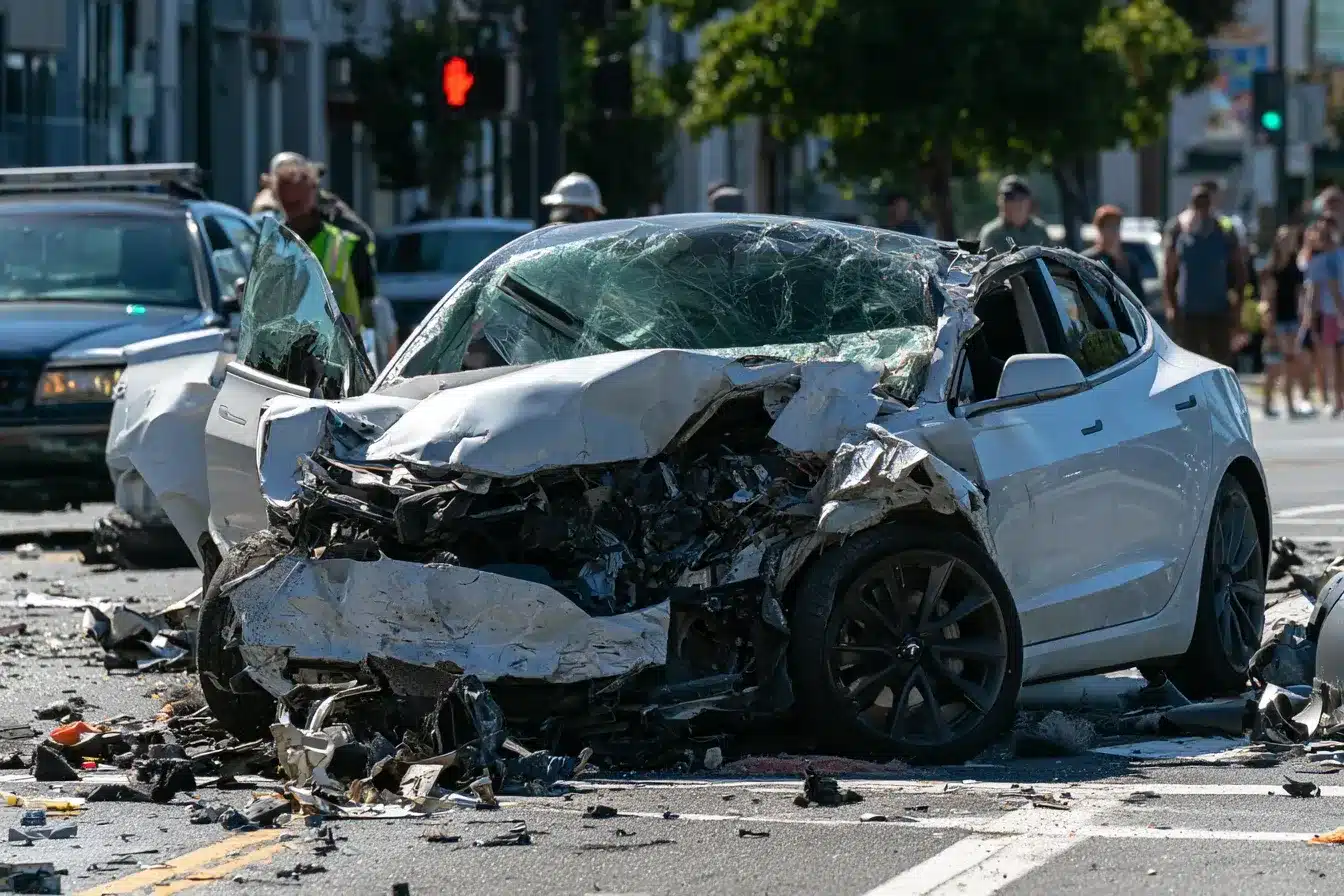
Bakersfield’s most dangerous intersections include Union Avenue and California Avenue, along with high-crash corridors on Ming Avenue and Gosford Road. We identified these locations using the Transportation Injury Mapping System (TIMS), a UC Berkeley research tool built on California’s official collision data, which ranks intersections by fatalities and serious injuries. Kern County sees frequent intersection crashes, and Bakersfield accounts for more of them than any other city in the county.
A crash at one of these intersections can leave you with broken bones, head trauma, or injuries that take days to fully surface. Beyond the physical pain, you are left facing mounting medical bills, missed work, and real uncertainty about what your case is worth.
The challenge grows because insurance adjusters know these intersections are dangerous, and they use that reputation against you. They lean on arguments like disputed right of way or shared fault to justify lowball offers, hoping you settle before you understand the full extent of your injuries or your legal options.
In this article, you will discover the 11 most dangerous intersections in Bakersfield, what drives the city’s high crash rate, and how a Bakersfield car accident attorney can help you hold the at-fault driver and their insurer accountable.
The Most Dangerous Intersections in Bakersfield, CA
Here is where the crashes happen most.
| Intersection | Area | Primary Risk | Common Crash Type |
| Union Avenue & California Avenue | Downtown | SR-204 freeway feeder traffic | Broadside, fatal |
| Ming Avenue & New Stine Road | Southwest | Shopping center turns, long lights | Left-turn, T-bone |
| Union Avenue & Niles Street | East | Signal violations, congestion | Broadside |
| Q Street & Golden State Avenue | Central | Multi-lane confusion | Rear-end, side-impact |
| Rosedale Highway & Calloway Drive | Northwest | High speeds, retail traffic | Rear-end |
| Stockdale Highway & Coffee Road | Southwest | Commuter volume | Left-turn |
| Panama Lane & Wible Road | South | Growth corridor congestion | Angle collisions |
| White Lane & Gosford Road | Southwest | Aggressive driving | Side-impact |
| Gosford Road & Ming Avenue | Southwest | High-speed approaches | High-speed T-bone |
| Real Road & Wilson Road | Central | Deceptively simple layout | Broadside |
| Highway 99 & Route 58 Interchange | Central | Freeway-speed merging | Rear-end, sideswipe |
Union Avenue and California Avenue
This intersection carries State Route 204 traffic between SR-58 and SR-99, two of Bakersfield’s busiest freeways. The speed and volume of through-traffic make it the deadliest intersection in the city.
Ming Avenue and New Stine Road
Multiple left-turn lanes and long red lights near Valley Plaza Mall create the conditions for T-bone crashes. Drivers try to beat the light cycle, and oncoming traffic pays the price.
White Lane and Gosford Road
Aggressive driving is the defining problem here. Side-impact crashes are frequent, and the injuries from them are serious.
Rosedale Highway and Calloway Drive
Higher-speed highway traffic meets congestion from nearby retail centers. Rear-end crashes are common when drivers misjudge how quickly the car ahead of them is stopping.
Gosford Road and Ming Avenue
Wide lanes encourage higher speeds, and red-light running during peak hours is a documented problem. The result is almost always a high-speed broadside crash.
Highway 99 and Route 58 Interchange
This is a freeway-speed merging zone, not a traditional intersection. Heavy truck traffic, confusing ramp layouts, and high speeds make rear-end crashes and sideswipes a daily occurrence.
Why Do Bakersfield Intersections Have So Many Crashes?
Bakersfield has one of the highest intersection crash rates in California. Most crashes come down to driver behavior, and road conditions that make every mistake more expensive.
- Right-of-way violations: The most common cause. One driver assumes they can go, they are wrong.
- Red-light and stop sign violations: Running a signal is a factor in many Kern County crashes every year.
- Commercial truck traffic: Bakersfield is a hub for oil and agriculture. Tanker trucks and tractor-trailers need far more stopping distance than a passenger car, and when they can’t stop in time, the damage from a commercial truck collision is devastating.
- Impaired driving: Alcohol or drugs play a disproportionate role in fatal intersection crashes here, and drunk driving injury claims often involve additional avenues of recovery.
- Unsafe speed: Going too fast for conditions leaves no time to react when another driver makes a mistake.
- Rapid growth: New neighborhoods and shopping centers have overloaded intersections that were never designed for this much traffic.
- Tule fog: Dense winter fog can cut visibility to a few feet. Traffic signals become impossible to see until it is too late.
Most of these causes point to a driver’s decision. That decision creates legal liability, and in most cases, a valid claim for you.
What Should You Do Right After a Bakersfield Intersection Crash?
The steps you take in the first 72 hours protect both your health and your legal rights. Here is what matters most.
- Get medical care the same day. Adrenaline hides injuries. A traumatic brain injury or internal bleeding can take hours, sometimes days, to appear. Do not wait.
- Call the police and get the report number. A police report is the official record of the crash. Get the report number before you leave the scene.
- Photograph everything. Capture vehicle positions, signal states, skid marks, and lane markings. This evidence cannot be recreated later.
- Find cameras and witnesses. Note which businesses face the intersection and get witness contact information. Security camera footage is often retained only for a short period.
- Follow up with your doctor within 72 hours. A follow-up visit creates a medical record that links your injuries to the crash. Gaps in care are the first thing an insurer uses to cut your recovery.
- Call us before you speak to any insurer. Even your own. A free consultation costs you nothing, and it protects everything.
How Do Insurance Companies Fight Bakersfield Intersection Claims?
Insurance adjusters know these intersections are dangerous.
They use that against you.
They arrive at your claim with a playbook designed to reduce or deny what you recover.
- “It was just an accident.” Every crash has a cause. That cause creates legal liability. This argument disappears under real evidence.
- “The light was green.” Both drivers often say this. We use signal timing records, vehicle damage patterns, and witness accounts to prove what actually happened.
- “You were speeding.” Without physical evidence, this is a negotiation tactic, not a legal defense.
- “You were partly at fault.” California follows pure comparative negligence, a rule that means you can still recover even if you were partially responsible. Your recovery is reduced by your share of fault, not eliminated.
Do not let an adjuster’s phone call become the end of your case.
One pattern we consistently see in intersection claims across Bakersfield is adjusters targeting the gap between the crash date and the first hospital visit. When someone is treated at Adventist Health Bakersfield or Kern Medical hours instead of minutes after a collision at intersections like White Lane and Gosford Road, insurers use that gap to argue the injury came from something else.
We counter this by pulling emergency dispatch logs and treatment timestamps before the adjuster can build that narrative. It is a tactic we see repeated across nearly every contested claim in this area.
How Does Kuzyk Law Prove Who Had the Right of Way?
Real advocacy is not loud.
It is precise.
It is prepared.
We build every case as if it will go to trial. That preparation is why insurers move off their opening offers and why our case results reflect substantial recoveries. We have recovered more than $1 billion for injured clients and represented more than 100,000 people since 1971. Preparation creates leverage.
Here is what we gather for an intersection case.
- Signal timing data. We request the City of Bakersfield’s official signal timing logs. This shows which direction had the green, down to the second.
- Business and street cameras. We send legal preservation letters to nearby gas stations, ATMs, and stores within the first week. Once footage is gone, it is gone.
- Vehicle black box data. Modern cars record speed, braking, and steering in the seconds before impact. We retrieve that data.
- Witness canvassing. Our team returns to the intersection to find regular commuters, pedestrians, and business owners who saw the crash.
- Expert accident reconstruction. When liability is disputed, we hire reconstruction specialists who rebuild the physics of the crash and present it clearly to a jury.
What we see across the right of way disputes we handle in Kern County is that the strongest cases are built long before anyone sets foot in Kern County Superior Court. Insurers count on drivers accepting a fault split based on nothing more than two conflicting stories.
In our experience handling intersection cases at locations like Rosedale Highway and Calloway Drive, signal timing data and vehicle black box readouts consistently settle disputes that would otherwise come down to conflicting accounts. That evidence is what convinces an adjuster, or a judge, to assign fault correctly.
What Drives the Value of Your Bakersfield Settlement?
Winning matters. But what you keep matters more.
The number on a settlement check is not the same as what reaches your pocket. Medical liens, unclear fees, and predatory lending quietly drain your net recovery, the amount you actually take home. Protecting that number is our job from the first call through the final disbursement.
- Policy limits and underinsured motorist coverage. California minimum coverage is often too low for a serious injury. Your own underinsured motorist policy, the coverage that pays when the at-fault driver’s insurance falls short, is frequently your largest source of recovery.
- Documented medical treatment. Ongoing records are critical. We work with your doctors to calculate future surgeries, therapy, and long-term care costs.
- Lost wages and household services. Your claim covers income you could not earn and tasks you can no longer perform, childcare, yard work, and daily household responsibilities.
- Lien negotiation. After we secure your settlement, we fight again, this time with your medical providers, to reduce what you owe them. Every dollar we cut from a lien goes directly to you.
In our experience handling settlement negotiations for Bakersfield intersection crashes, the biggest threat to your final payout often comes after the case settles, not before. Hospitals like Adventist Health Bakersfield and Kern Medical file liens that can consume a significant share of a settlement if they are not negotiated down.
One pattern we consistently see is that clients who come to us early, before liens are finalized, keep substantially more of their recovery than those who try to negotiate on their own. That difference is often the deciding factor in whether a settlement actually covers ongoing care.
Injured at a Bakersfield Intersection?
We represent injured people throughout the Central Valley and Antelope Valley. We have helped clients secure recoveries through our offices in Bakersfield, Lancaster, and Fresno.
Your free consultation is available anytime. Our phones are open 24/7. We serve both English and Spanish-speaking clients. You pay nothing unless we win.
Precise. Prepared. Built to protect your recovery.
Frequently Asked Questions
Do You Need a Police Report to File a Bakersfield Car Accident Claim?
No. A police report is helpful, but we can open your case without one, and get the report, 911 audio, and dispatch logs ourselves.
How Quickly Do You Need to Secure Intersection Camera Footage After a Crash?
Act within days. To preserve any available business or traffic camera footage, we send legal preservation letters in the first week of your case.
What Happens When Both Drivers Claim They Had the Green Light?
It does not end your case. Signal timing records, vehicle damage patterns, and witness accounts almost always resolve which driver had the right of way.
What If the At-Fault Driver Only Has Minimum Insurance Coverage?
Your own Uninsured/Underinsured Motorist (UM/UIM) policy is often your primary source of recovery. We also investigate every other party who may share liability for the crash.
Can the City of Bakersfield Be Liable for a Dangerous Intersection Design?
Yes, if a signal malfunction, missing sign, or known design defect caused your crash. California requires a formal notice filing within six months for any claim against a government entity.
What If You Were Partly at Fault for the Bakersfield Crash?
California’s pure comparative negligence rule allows you to recover compensation even if you shared fault. Your total recovery is reduced by your percentage of fault, not eliminated entirely.
How Long Do You Have to File a Bakersfield Intersection Injury Claim?
The standard deadline in California is two years from the date of the crash. If a government entity is involved, such as the city, the notice deadline drops to six months.
What Areas of Bakersfield Have the Most Dangerous Intersections?
Southwest Bakersfield, particularly along Ming Avenue and Gosford Road, and the downtown Union Avenue corridor consistently see the highest crash volumes. Extra caution in these areas is always warranted.