
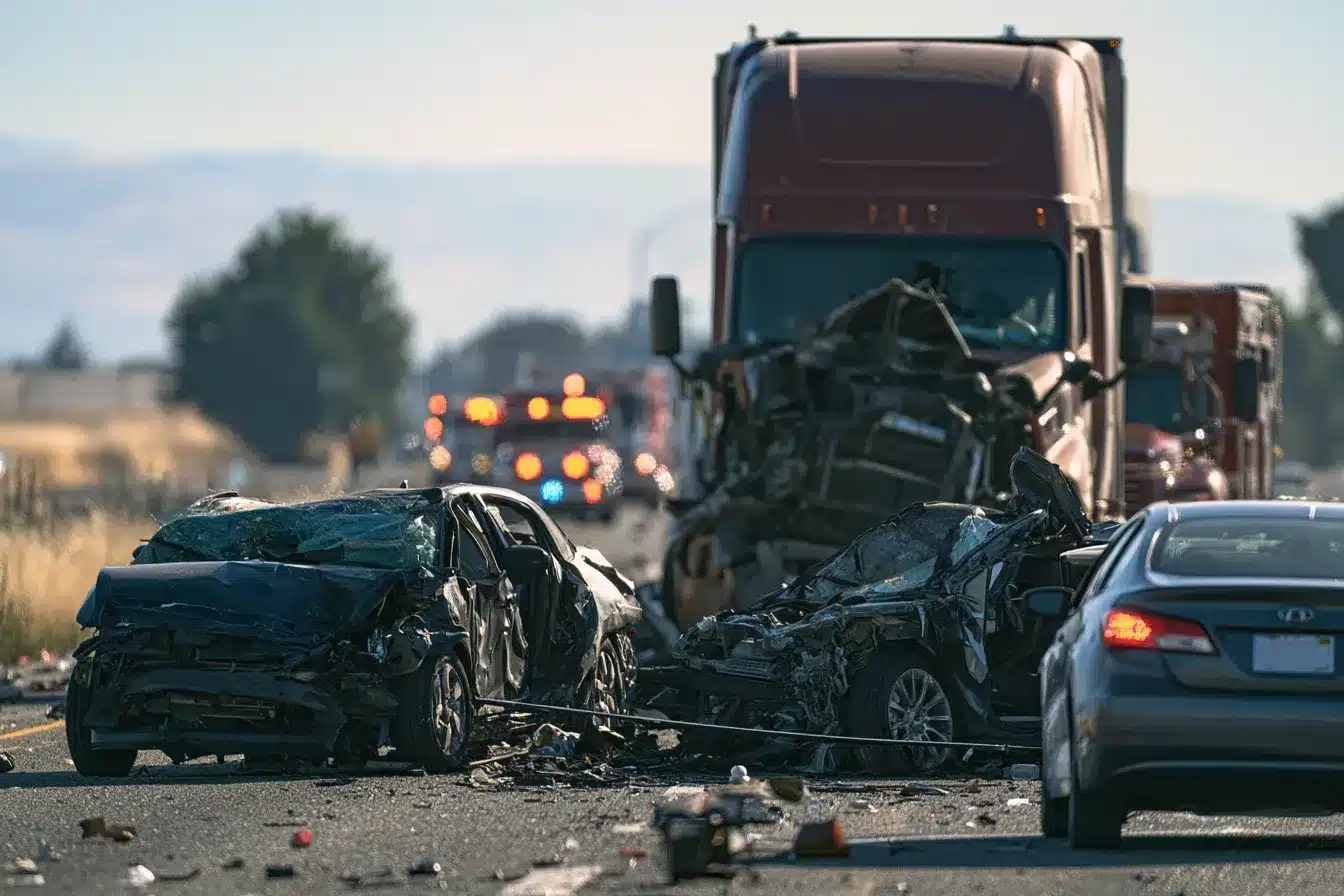
SR-99 is California’s deadliest highway per mile, and federal and state safety data consistently rank it above I-5, I-405, and US-101. That ranking reflects fatal crashes divided by the highway’s total length, a measure of how dangerous each individual mile actually is, not just the total number of crashes recorded each year.
A crash on SR-99 can happen in seconds, whether it is Tule fog dropping visibility to near zero outside Fresno, a loaded truck merging into traffic near Bakersfield, or an impaired driver crossing the center line after dark. Unlike Interstate 5, which bypasses most cities, SR-99 cuts directly through Bakersfield, Fresno, Modesto, Stockton, and Sacramento, forcing highway speeds and city traffic into the same lanes for nearly the entire route.
High DUI rates across the Central Valley and short merge lanes built before modern safety standards make the danger worse. For anyone hurt in one of these crashes, the result is often serious injuries, mounting medical bills, and an insurance company already looking for ways to pay less.
When you hear that SR-99 is the deadliest highway per mile, that means the number of fatal crashes divided by the total length of the highway, a measure of how hazardous each individual mile actually is, not just the total crash count. State Route 99 is a 425-mile highway running through the heart of California’s Central Valley. It connects Wheeler Ridge, just south of Bakersfield, all the way north to Red Bluff.
In this article, you will discover why SR-99 is so dangerous, what steps to take in the hours after a crash to protect your health and your claim, and how a Bakersfield or motor vehicle accident lawyer in Fresno can help you pursue full and fair compensation.
Is SR-99 the Deadliest Highway in California per Mile?
Yes. State and federal highway safety data have consistently ranked SR-99 as California’s most dangerous highway on a per-mile basis. It outranks I-5, I-405, and US-101 by a significant margin.
Nationally, SR-99 has appeared in multiple highway safety analyses as one of the deadliest corridors in the country, not just in California.
The reason is not one single factor. It is an overlapping set of hazards, speed, fog, freight traffic, and poor road design, all concentrated along the same stretch of highway.
Why Is SR-99 so Dangerous?
SR-99’s ranking reflects specific, documented conditions. Understanding them is the first step in protecting yourself.
Speed and Aggressive Driving
Posted speed limits are higher on rural stretches and lower through urban areas such as Fresno and Bakersfield. Most drivers do not adjust. The gap between high-speed through-traffic and vehicles slowing to exit creates high-energy conflicts at every ramp and interchange.
DUI and Impaired Driving
The Central Valley counties SR-99 runs through, Kern, Tulare, and Fresno, rank among the highest in California for DUI-related fatalities. At highway speeds, an impaired driver has almost no ability to react before impact.
Tule Fog and Winter Visibility
Tule fog is a dense, ground-hugging fog unique to California’s Central Valley. Unlike ordinary fog, it can reduce visibility to under ten feet in seconds, with no warning. Drivers traveling at 70 mph suddenly cannot see the vehicle directly in front of them. This is what causes SR-99’s chain-reaction pileups each winter, from November through March.
Heavy Trucks and Agricultural Traffic
SR-99 is a primary route for freight and farm produce. Fully loaded big rigs, flatbeds, and slow-moving farm equipment share lanes with commuters. A sudden speed difference between an 80,000-pound truck and a passenger car is one of the most dangerous conditions on any highway.
Short Merges and Frequent Access Points
Much of SR-99 was built before modern interstate safety standards. On-ramps are short, giving drivers very little distance to reach highway speed before merging. Unlike interstates designed to limit access, SR-99 has dozens of exits per county, and each one is a place where high-speed and low-speed traffic must occupy the same lane.
Where Are the Deadliest Stretches of SR-99?
The danger does not spread evenly. The deadliest segments are concentrated where population density, freight volume, and fog risk overlap most heavily, primarily in the southern and central sections of the corridor.
| Corridor | Counties | Primary Risk Factors |
| Bakersfield to Delano | Kern | Truck traffic, DUI, high speeds |
| Tulare to Fresno | Tulare, Fresno | Tule fog, urban merges |
| Madera to Merced | Madera, Merced | Agricultural crossings, longer EMS response |
| Modesto to Stockton | Stanislaus, San Joaquin | Commuter volume, aggressive lane changes |
| South Sacramento approach | Sacramento | Traffic density, constant weaving |
Year after year, crash data shows Kern and Fresno counties record the highest concentration of fatal accidents along the entire SR-99 corridor.
One pattern we consistently see in SR-99 crash claims near Bakersfield is how often the collisions cluster around the interchange where SR-99 meets SR-58 on the west side of the city.
Traffic merging from the Westside Parkway onto SR-99 creates short windows for drivers to react, and we regularly handle cases where a rear-end or sideswipe crash near that interchange leaves our client with injuries serious enough to require care at Kern Medical.
What we see across these Kern County claims is that the insurance company’s first move is to argue the crash happened too fast for anyone to avoid it, when the real issue is a merge point that gives drivers too little room to safely combine speeds.
When Do Most SR-99 Crashes Happen?
Winter, November through March, is when Tule fog causes the largest chain-reaction pileups. Summer holidays drive a different kind of spike: drunk driving and high-speed crashes tied to holiday travel.
The most dangerous time of day is late at night and in the hours just before dawn. That is when impaired and drowsy drivers are most concentrated on the road, and when first-responder response times are longest.
How Can You Drive SR-99 More Safely?
Even the most careful driver faces real risk from someone else’s poor decision. But there are specific things you can do to reduce your exposure.
- Check Caltrans QuickMap before every winter trip: Fog advisories update in real time. Knowing what is ahead before you leave gives you the chance to delay, reroute, or prepare.
- Maintain at least six seconds of following distance: In the Central Valley, that extra space can be the difference between stopping in time and a catastrophic rear-end crash.
- Avoid the far-left lane in truck-heavy corridors: Between Bakersfield and Fresno especially, big rigs shift lanes frequently. Staying right keeps you out of their blind spots.
- Never stop in a travel lane during fog: Pull fully onto the shoulder, turn off your headlights, release the brake, and move away from your vehicle if it is safe. A stationary car in a live lane during Tule fog is extraordinarily dangerous.
- Plan every stop before you leave: Last-second braking for a missed exit is a documented cause of rear-end crashes on SR-99.
Even when you follow all of this, the driver next to you may not. That is where we come in.
In our experience handling SR-99 crash cases along the Fresno stretch of the corridor, the injuries that turn out to be more serious than they first appear are the ones we see most often.
Clients frequently walk away from a crash near the Fresno interchanges feeling shaken but functional, only to be diagnosed days later at Community Regional Medical Center with a soft tissue injury or a concussion that adrenaline had been masking.
What we consistently observe in these Fresno County claims is that the client who delays care ends up with a thinner medical record, and a thinner record is exactly what the insurance company uses to argue the injury was minor.
What Should You Do after an SR-99 Accident?
The steps you take in the first 24 to 48 hours directly shape what you are able to recover. Follow this sequence.
Call 911 and Move to Safety
Report the crash immediately. If your vehicle can be moved, get it fully onto the shoulder, especially in fog or high-speed zones. A second crash at the same location is a real and documented risk.
Document the Scene and Identify Witnesses
Photograph everything before anything is moved: vehicle positions, skid marks, road signs, weather conditions, and your visible injuries. Get the names and phone numbers of any witnesses on scene. People leave fast once CHP arrives.
Get Medical Care and Keep Records
See a doctor the same day, even if you feel fine. Adrenaline masks injuries, whiplash, internal bleeding, and traumatic brain injuries can take hours or days to surface. A gap between your crash date and your first medical visit is one of the first things an insurance company will use to argue your injuries were not serious.
Decline Recorded Statements from Insurers
The at-fault driver’s insurance company will call you, often within 24 hours. You are not required to give a recorded statement. Those calls are not about helping you. They are designed to find reasons to minimize your claim.
Preserve Your Vehicle and EDR Data
Do not repair or scrap your vehicle before an attorney has reviewed it. Most modern cars contain an Event Data Recorder, an EDR, that captures speed, braking force, and seatbelt status in the seconds before impact. This data can establish exactly what happened. It can also be overwritten or permanently lost if the vehicle is repaired or totaled out too quickly.
Call Kuzyk Law Personal Injury & Car Accident Lawyers before You Sign Anything
We are available 24 hours a day, seven days a week. Your consultation is free. You pay nothing unless we win. We know this road, these courts, and the adjusters who handle these cases. Our job is to make sure the number you walk away with is not quietly drained by liens, rushed settlements, or insurance company pressure.
What Compensation Can You Recover after an SR-99 Crash?
Under California law, the at-fault driver and their insurance company are responsible for the full cost of what your crash has taken from you, not just your emergency room bill.
- Medical Bills and Future Care: Every treatment you have needed since the crash, and every treatment you will need going forward, surgery, rehabilitation, and long-term care.
- Lost Income and Future Earnings: The wages you could not earn during recovery, plus compensation for any reduction in your ability to work in the future.
- Pain and Suffering: Physical pain, emotional distress, and the loss of enjoyment of life you had before this crash. California pain and suffering law allows you to be compensated for all of it.
- Property Damage: The repair or replacement cost of your vehicle, plus rental expenses while yours is out of service.
- Wrongful Death Damages: If you lost a family member in a fatal SR-99 crash, surviving family members may pursue compensation for lost financial support and loss of companionship.
Most people do not realize the first number an insurer puts in front of you is a starting point, not a fair offer. We routinely negotiate much higher settlements than insurers’ initial offers. We routinely turn low initial settlement offers into substantially larger recoveries for our clients.
Winning matters. But what you keep matters more.
One pattern we consistently see in SR-99 injury claims we file through Kern County Superior Court is how quickly insurers try to close a file before the true cost of a crash is known. We routinely handle claims where the first settlement offer arrives before a client has finished physical therapy, let alone learned whether they will need future surgery.
What we see across these Bakersfield area cases is that clients who wait for a complete medical picture before accepting anything recover significantly more than the number originally offered.
How Long Do You Have to File an SR-99 Injury Claim?
California sets hard legal deadlines. Miss them and you lose your right to recover anything, regardless of how serious your injuries are.
- 2 Years: The standard deadline to file a personal injury lawsuit in California from the date of the crash.
- 6 Months: The deadline when your claim involves a government entity, like Caltrans, for example, if a road defect contributed to the crash.
- Days: The real window to preserve the evidence that wins cases. Dashcam footage is deleted on 30-day cycles. EDR data can be overwritten. Witnesses forget details fast.
Call us early. The sooner we start, the more evidence we can still recover.
Frequently Asked Questions
Is SR-99 More Dangerous than I-5?
Yes, on a per-mile basis. I-5 has more total crashes because of its greater length, but SR-99 has a higher concentration of fatal crashes for every mile of roadway.
How Do I Get a CHP Collision Report after an SR-99 Crash?
Request a copy using Form CHP 190 from the California Highway Patrol office that responded to the scene, reports are typically available about 10 days after the crash.
What If the Driver Who Hit Me on SR-99 Was Uninsured?
You can file a claim under your own Uninsured/Underinsured Motorist coverage, or UM/UIM, this coverage exists specifically for situations where the at-fault driver carries no insurance.
Who Pays My Medical Bills before an SR-99 Case Settles?
Your health insurance, your auto policy’s MedPay coverage, or a medical lien, where your provider agrees to be paid from your final settlement, can cover costs in the meantime. How those liens are structured and negotiated at closing is one of the biggest places your net recovery is quietly at risk.
Does Tule Fog Change Who Is at Fault in an SR-99 Crash?
California Basic Speed Law requires every driver to adjust their speed to match current road conditions, and driving too fast in Tule fog is negligence regardless of the posted speed limit.
Do You Help Spanish-Speaking Clients after an SR-99 Crash?
Yes, our full legal services are available in Spanish, you can reach us and find more information at espanol.kuzyklaw.com.