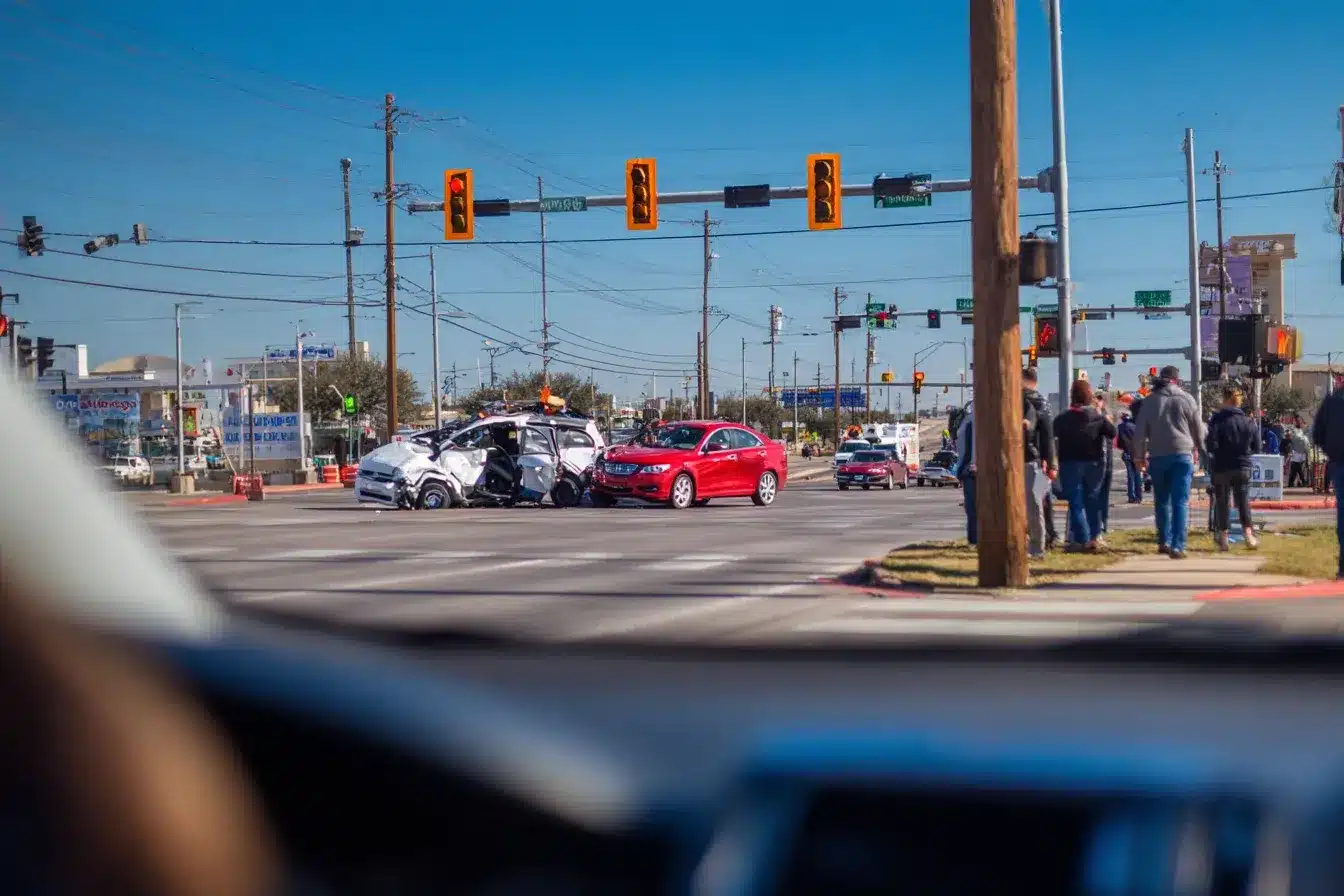
The most dangerous intersections in Lancaster, CA include Avenue K and 10th Street West and Avenue I and 30th Street West. Lancaster Boulevard and Sierra Highway, Avenue J and 20th Street East, and Avenue H and 15th Street West round out the list, based on California crash data from the Statewide Integrated Traffic Records System (SWITRS) and Los Angeles County Sheriff’s Department records.
Crashes at these corners often mean serious injuries, expensive medical bills, and confusion about what to do next. Wide, fast-moving avenues and heavy commuter traffic turn routine left turns and quick trips through downtown into T-bone collisions, rear-end pileups, and pedestrian strikes. Victims are left dealing with pain, lost income, and insurance adjusters who move fast to limit what they pay.
The challenge grows because each high-crash intersection has its own pattern, speeding on Avenue I, failed left turns on Avenue H, red-light risk on Lancaster Boulevard, and school-zone congestion on Avenue J. Without knowing how location and crash type affect fault and compensation, victims can accept less than their case is worth or miss steps that protect their claim.
In this article, you will discover which Lancaster intersections see the most crashes, what causes them, and how a Lancaster car accident attorney can help you protect your right to compensation after a crash.
Where Are the Most Dangerous Intersections in Lancaster, CA?
Lancaster’s five most dangerous intersections are Avenue K and 10th Street West, Avenue I and 30th Street West, Lancaster Boulevard and Sierra Highway, Avenue J and 20th Street East, and Avenue H and 15th Street West.
These corners share one thing in common: they sit where major arterials cross, where traffic volume peaks, and where one driver’s small mistake becomes someone else’s emergency.
Our firm operates from an office at 1700 W. Avenue K. We know these intersections because we drive them, and because we have spent more than 50 years representing neighbors who were hurt on them.
| Intersection | Primary Crash Type | Why It’s Dangerous |
| Avenue K & 10th St W | Left-turn, rear-end | High volume, multiple turn lanes, and major retail access create constant conflict points |
| Avenue I & 30th St W | Broadside (T-bone) | Wide arterial speeds collide with poor gap judgment |
| Lancaster Blvd & Sierra Hwy | Pedestrian, rear-end | Heavy foot traffic meets distracted and impatient drivers |
| Avenue J & 20th St E | Pedestrian, broadside | School zones and commuter traffic overlap daily |
| Avenue H & 15th St W | Left-turn | Shopping center access creates dangerous turning gaps into fast-moving cross traffic |
Avenue K and 10th Street West
Central Lancaster’s busiest crossing puts commuters, shoppers, and local drivers in the same limited space. Multiple turning lanes create constant conflict points, and rear-end crashes and left-turn collisions dominate the data here.
Avenue I and 30th Street West
This wide stretch invites speed, and speed destroys judgment. Drivers misjudging the gap in oncoming traffic before turning is the primary cause of broadside crashes, also called T-bone collisions, where one car’s front end strikes the side of another.
Lancaster Boulevard and Sierra Highway
Downtown Lancaster’s most active intersection puts foot traffic directly in conflict with vehicles navigating parking, signals, and cross-traffic. With restaurants and businesses on all sides, pedestrian strikes and rear-end collisions are the dominant pattern.
Avenue J and 20th Street East
School zones and residential streets push this intersection’s risk up during the morning and afternoon commute windows. Hurried parents, young pedestrians, and regular commuters compete for the same right of way every weekday.
Avenue H and 15th Street West
Shopping center driveways line this corridor, and most crashes here are caused by left-turn movements into those lots. Drivers waiting to turn frequently underestimate how fast approaching traffic is moving.
What Makes These Intersections So Dangerous?
Dangerous intersections are not a coincidence. They are the result of the same small set of driver behaviors, repeated at the same corners, day after day.
- Speeding on wide roads: Lancaster’s long, straight avenues encourage drivers to exceed the posted limit, which shrinks reaction time and amplifies the damage when a crash occurs.
- Failed left turns: Misjudging the gap before turning left is one of the most dangerous moves a driver can make and a leading cause of the most severe injuries we see.
- Running red lights: Trying to beat a yellow almost always results in a broadside collision, where the side of a vehicle absorbs the full force of impact.
- Distracted driving: A phone, a GPS, a snack, any of them can pull a driver’s focus off the road at the worst possible moment.
- Sun glare and dust: The Antelope Valley’s desert climate creates blinding glare at sunrise and sunset and sudden visibility loss during dust events, a hazard that the rest of Southern California simply does not deal with the same way.
What Types of Crashes Happen at Lancaster Intersections?
The type of crash determines the type of injury. The type of injury shapes your entire legal claim. These distinctions matter more than most people realize.
- Rear-end collisions: These happen when a driver follows too closely or fails to watch for slowing traffic ahead, and they are a primary cause of whiplash and serious spinal injuries, even at moderate speeds.
- Broadside crashes (T-bone): One vehicle’s front end hits the side of another, producing one of the most violent collision types because a car door offers very little protection against a direct lateral impact.
- Pedestrian strikes: People on foot have no protection from a moving vehicle. These crashes are most common near Lancaster Boulevard and school zones, and the injuries are almost always severe.
- Motorcycle and bicycle crashes: Drivers frequently fail to see motorcyclists and cyclists, particularly when turning. Because there is nothing between a rider and the road, these collisions tend to produce the most catastrophic outcomes.
What we see across the intersection crash claims we handle in Lancaster is that injury severity often does not match how the crash looked at the scene. Clients who walk away from a broadside collision at Avenue I and 30th Street West sometimes end up at Antelope Valley Medical Center days later once numbness or dizziness sets in.
We have learned to treat every intersection crash claim as a potential serious injury case until medical imaging says otherwise. That pattern shapes how carefully we document a client’s condition from day one.
When Are Lancaster Intersections Most Dangerous?
Crashes are not random. They follow clear patterns, and knowing those patterns can help you protect yourself and your family.
The highest-risk windows in Lancaster are:
- Weekday mornings from 7 to 9 a.m., when commuter traffic floods the avenues
- Weekday afternoons from 4 to 6 p.m., the deadliest daily window
- Friday and Saturday nights near downtown Lancaster Boulevard
- School arrival and dismissal times on weekdays
- Early morning and late afternoon, when desert sun glare is at its worst
Most crashes are not random.
They cluster.
By hour.
By corner.
By habit.
How Do You Stay Safe at Lancaster Intersections?
You cannot control every other driver on the road. But you can make deliberate choices that reduce your exposure at the intersections most likely to cause a crash.
- Slow down before the stop line. Approaching at full speed and braking late is one of the most common setups for a rear-end collision. Build in distance.
- Check your left-turn gap twice. One glance is not enough. Confirm the gap in oncoming traffic, then confirm it again before you commit to the turn.
- Look before you go on green. A green light gives you the right to proceed. It does not guarantee the intersection is clear. Check both directions before you move.
- Yield to pedestrians even when you have the right of way. They may not see you coming. Waiting three extra seconds costs you nothing.
- Avoid peak hours when your schedule allows. Shifting your route by 15 to 20 minutes can move you entirely out of the highest-risk window.
In our experience handling intersection crash cases across Lancaster, the drivers who avoid the worst injuries are usually the ones who took an extra second at the stop line, not the ones who reacted fastest afterward. We regularly see claims from Avenue K, Avenue I, and Lancaster Boulevard where a driver’s own account of slowing down and checking the gap twice before proceeding becomes the strongest piece of evidence in their case. Small habits like a second look before a green light or a wider yield to pedestrians rarely show up in a police report, but they show up in how a claim resolves.
What to Do After a Lancaster Intersection Crash
The decisions you make in the first 24 hours after a crash will shape everything that follows, your medical recovery, your legal claim, and the amount you ultimately walk away with. Take them seriously.
Call 911 and Move to Safety
If you can safely move your vehicle out of active traffic lanes, do it. Then call for police and emergency services immediately to prevent the situation from getting worse.
Document the Scene Before Anything Moves
Use your phone to photograph both vehicles, the intersection, skid marks, traffic signals, and any visible injuries. Get the other driver’s name, license plate, and insurance information, but do not discuss fault with anyone at the scene.
Get Medical Care Even If You Feel Fine
Adrenaline can completely mask serious injuries. Concussions, internal bleeding, and soft-tissue damage often produce no clear symptoms for hours or even days after a crash. Get examined before you assume you are fine.
Call Us Before You Call the Adjuster
The insurance company’s first offer is almost always their lowest. We routinely decline inadequate initial offers and negotiate substantially better settlements for our clients. Since 1971, we’ve helped clients across the Antelope Valley and beyond secure meaningful compensation for their injuries.
Winning matters.
But what you keep matters more.
A large settlement number on paper means nothing if medical liens, opaque fees, and a rushed agreement quietly drain your actual recovery. We protect what you walk away with, not just what the offer letter says.
One pattern we consistently see in Lancaster intersection crash claims is that clients who request their collision report from the Los Angeles County Sheriff’s Department Lancaster Station within the first week end up with a clearer record than those who wait a month or more.
We also see clients along the Antelope Valley Freeway corridor and the surface streets feeding into it get hurt in ways that do not show symptoms until several days after the crash.
Insurance adjusters tend to seize on that delay and question whether the injury was really caused by the collision. Building a clear paper trail from the first day forward is the habit that helps our clients the most.
How We Rank Lancaster’s Most Dangerous Intersections
Our rankings are not based on guesses or headlines. They are built on public crash data and cross-referenced with the patterns we observe every day representing injured clients from these same streets.
SWITRS and CHP Collision Reports
SWITRS, the Statewide Integrated Traffic Records System, is California’s official database of reported traffic collisions. It is our primary source for identifying which intersections produce the most crashes and the most serious injuries.
LASD Lancaster Station and City Engineering Records
We cross-reference SWITRS data with collision records from the Los Angeles County Sheriff’s Department Lancaster Station and public traffic-engineering reports to build a more detailed, street-level picture of local problem areas.
What the Data Does Not Capture
Public records are often delayed, and not every collision is reported to law enforcement. Our rankings combine official data with firsthand patterns we see representing Antelope Valley clients every day.
Injured at a Lancaster Intersection? Talk to Us Today
We have worked out of our office at 1700 W. Avenue K since 1971. These are our streets. Our clients have been hurt on them. Our neighbors drive them every single day.
We represent injured people only, no insurance-defense work, no corporate clients. We work on a contingency fee, meaning you pay nothing unless we win your case. Consultations are always free, and our phones are answered 24 hours a day. We also serve Spanish-speaking clients at espanol.kuzyklaw.com.
Real advocacy is not loud.
It is precise.
It is prepared.
And it is built to protect your recovery.
Call us today for a free, no-obligation review of your case.
Frequently Asked Questions
Which Lancaster Intersection Has the Most Reported Crashes?
Based on collision data and our case history, Avenue K and 10th Street West consistently ranks as one of the highest-frequency crash locations in Lancaster.
Does Lancaster Use Red Light Cameras to Catch Violations?
No, the City of Lancaster ended its red-light camera enforcement program and does not currently use automated cameras to issue tickets at any intersection in the city.
What Time of Day Has the Most Lancaster Intersection Crashes?
The afternoon commute window, roughly 4 to 6 p.m. on weekdays, typically sees increased traffic on Lancaster’s arterials.
How Do I Get a Police Report After a Lancaster Crash?
You can request your traffic collision report directly from the Los Angeles County Sheriff’s Department Lancaster Station, which is the responding agency for most crashes in the city.
How Long Do I Have to File a Car Accident Claim in California?
California law gives you two years to file a claim from the date of the crash. Miss that deadline, and you permanently lose your right to seek compensation.
Does Making a Left Turn Mean I Am Automatically at Fault?
No, California is a comparative fault state, meaning fault can be divided between drivers based on their individual actions, and if the other driver was speeding or ran a red light, they can be held partially or fully responsible even if you were the one turning.