
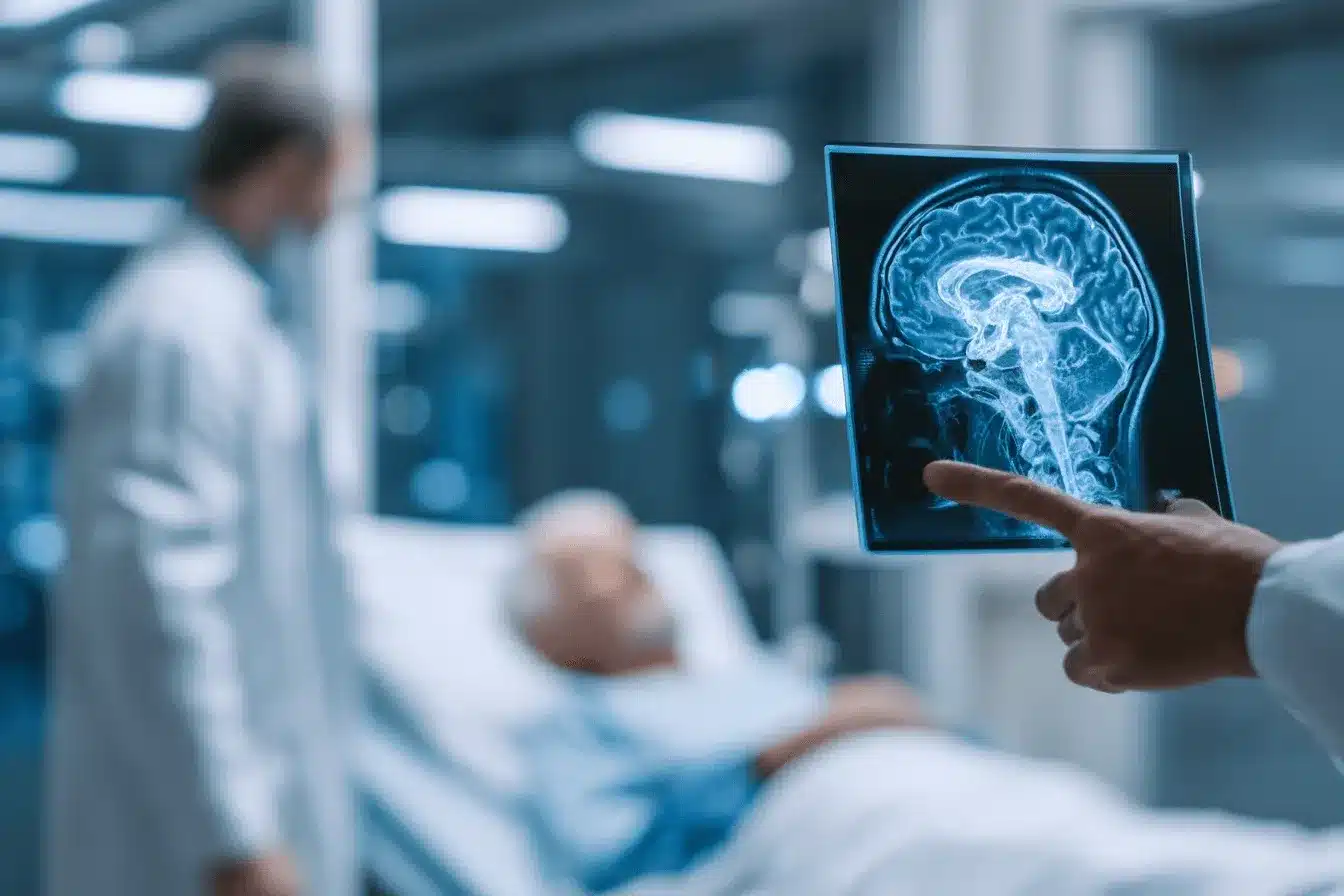
To file a traumatic brain injury lawsuit in California, you must prove negligence, gather medical evidence, and meet the two year deadline. TBI cases often require specialized documentation from neurologists and neuropsychologists to demonstrate the full extent of your injury. Working with an experienced attorney early on helps protect your claim and strengthen your case right from the start.
Brain injury cases are harder to win than most people expect. Insurance companies routinely deny TBI claims because standard MRI and CT scans frequently appear normal even when a serious injury exists. Without advanced imaging, neuropsychological testing, and a lawyer who understands how to present that evidence, a real TBI can be dismissed as exaggeration.
The problem is compounded by timing. The evidence that matters most in a brain injury case, dashcam footage, vehicle black box data, witness accounts, disappears within days if no one sends a formal preservation demand.
The trucking company or at-fault driver’s insurer dispatches its own investigators quickly, and by the time most injured people think to call a lawyer, the other side already has its version of events locked in.
In this article, you will learn every step of the California TBI lawsuit process, who you can sue, what evidence actually proves a brain injury when scans look normal, and how a California brain injury attorney can help you recover the full compensation you deserve.
Step 1: Get Medical Care and Document Your Symptoms
See a doctor the same day, even if you feel fine. Many brain injuries don’t show symptoms right away. Headaches, confusion, mood swings, and memory gaps can appear days or even weeks after the incident.
Keep a daily journal of how you feel. Ask a spouse or family member to write down changes they notice in your behavior, sleep, and concentration. We coordinate directly with your treating doctors so you don’t have to chase down records on your own.
Step 2: Preserve Evidence Before It Disappears
Surveillance footage gets overwritten within days. Witnesses forget details. Vehicles get repaired. The window to collect evidence is short.
Secure the following immediately:
- Photos and video: Document the scene, the vehicles involved, and your visible injuries.
- Witness information: Collect names and phone numbers from anyone who saw what happened.
- Police report: Request a copy as soon as it becomes available.
- Vehicle black box data: The event data recorder captures speed, braking, and steering inputs before impact.
- Medical and employment records: Save every bill, pay stub, and doctor’s note from day one.
We send a spoliation letter the day you hire us. A spoliation letter is a formal legal notice that tells the other party to stop destroying evidence.
Step 3: Hire a California Brain Injury Lawyer
Insurance adjusters routinely deny TBI claims when standard MRI or CT scans look normal. Proving your injury requires advanced testing and expert witnesses that most people don’t know how to access on their own.
Kuzyk Law Personal Injury & Car Accidents Lawyers works on a contingency fee basis. A contingency fee means you pay nothing unless we win. We advance all costs for investigations, imaging, and expert witnesses so your financial situation never limits your case.
Step 4: Build Your Pre-Suit Demand
Before we file anything in court, we build your case from the ground up. We collect your medical records, order advanced imaging, and hire neurologists and neuropsychological experts to evaluate the full extent of your injury.
We then send a formal demand package to the insurance company. This package outlines who is liable, the severity of your injuries, and the compensation you deserve. Many cases resolve at this stage when the evidence is strong enough.
Step 5: File the Complaint
If the insurance company refuses a fair offer, we file a formal complaint in the appropriate California superior court. The complaint names every defendant, lists the legal claims against them, and states the compensation you are seeking.
Serving the defendants means formally delivering the lawsuit to each party. The case is typically filed in the county where your injury occurred.
Step 6: Discovery, Defense Exam, and Mediation
Discovery is the formal exchange of evidence between both sides. This includes written questions called interrogatories, document requests, and depositions where witnesses answer questions under oath.
The insurance company will likely request a defense medical exam. This is an evaluation by a doctor they choose and pay for. We prepare you for that exam and challenge any conclusions that don’t reflect your actual condition.
Most cases then move to mediation, where a neutral third party helps both sides negotiate a resolution before trial.
Step 7: Trial
If mediation doesn’t produce a fair result, we take your case to a jury. A jury hears the evidence, reviews expert testimony, and decides both liability and damages.
Most cases settle before trial. But our willingness to go to verdict is exactly what pressures insurance companies to make fair offers. Kuzyk Law Personal Injury & Car Accidents Lawyers has experience taking catastrophic TBI cases to trial when insurers refuse to settle.
Who Can You Sue for a Brain Injury in California?
California law allows you to file a lawsuit against any person or entity whose negligence caused your injury. The right defendant depends entirely on how your injury happened.
Common liable parties include:
- Negligent drivers: Drivers who caused a crash through speeding, distraction, or impairment can be sued directly, along with their auto insurer.
- Property owners: Businesses and landlords who fail to maintain safe premises can be held responsible for falls, assaults, or structural failures that cause head injuries.
- Employers and contractors: If a third party other than your direct employer caused your workplace injury, you may have grounds for a lawsuit on top of a workers’ compensation claim.
- Manufacturers: If a defective helmet, vehicle component, or piece of equipment contributed to your injury, the manufacturer may face a product liability claim.
- Government entities: Cities, counties, and state agencies can be sued for dangerous road conditions, but a strict six-month notice deadline applies under California Government Code 911.2.
One pattern we see in TBI cases filed out of the Fresno area is that government entity liability becomes relevant when a dangerous road condition contributed to the crash.
SR-99 construction zones between Fresno and Madera, improperly marked work zones on Highway 41, and deteriorating pavement on heavily trafficked Blackstone Avenue intersections have all generated claims against Caltrans and the City of Fresno.
Government entity claims require a tort claim notice filed within six months of the incident, well before the standard two-year personal injury deadline, which is why identifying every potentially liable party in the first few days is essential.
What Evidence Proves a Traumatic Brain Injury?
Standard MRI and CT scans frequently appear normal even when a serious brain injury exists. This is one of the most common reasons insurance companies deny TBI claims. We use layered medical proof to close that gap.
Advanced Brain Imaging
Standard hospital scans miss a significant amount of TBI damage. We work with specialists who use more precise tools:
- Diffusion tensor imaging (DTI): Shows damage to the brain’s internal wiring that a standard MRI cannot detect.
- Susceptibility-weighted imaging (SWI): Identifies small bleeds and micro-damage in brain tissue.
- Functional MRI (fMRI): Measures how different areas of the brain are actually functioning during specific tasks.
Neuropsychological Testing
A neuropsychologist administers a comprehensive battery of tests that measure memory, attention, processing speed, and decision-making. This means you receive an objective, documented picture of how your brain is functioning compared to expected norms. These results are difficult for an insurance company to dismiss.
Vestibular and Balance Testing
The vestibular system controls your balance and spatial awareness. TBIs frequently damage this system, causing dizziness and difficulty walking. Tests like videonystagmography produce measurable data that proves these symptoms are real and injury-related.
What we see consistently in the TBI cases we handle in California is that neuropsychological testing fills the evidentiary gap when standard imaging comes back normal. Insurance adjusters managing files from carriers operating throughout the Central Valley routinely deny TBI claims after a normal MRI because the defense argument is simple and familiar to juries. What it does not account for is a comprehensive neuropsychological battery showing measurable deficits in memory, processing speed, and executive function that are inconsistent with the client’s pre-injury baseline. We connect clients with neuropsychologists who specialize in TBI assessment, and that testing is almost always what changes the insurer’s position.
What Compensation Can You Recover After a Brain Injury?
California law allows you to recover two types of damages: economic and non-economic.
| Damage Type | What It Covers |
| Economic | Medical bills, future care costs, lost wages, reduced earning capacity, home modifications |
| Non-Economic | Physical pain, emotional distress, loss of enjoyment of daily activities, loss of consortium |
Punitive damages may also apply when the defendant’s conduct was especially reckless, such as a drunk driving crash. We work with life care planners to calculate every cost tied to your recovery, including therapy, medication, assistive equipment, and in-home care. A fast settlement offer from an insurance company rarely accounts for those long-term expenses.
In our experience handling TBI cases in California, the future care cost dispute is where insurance companies push back the hardest and where the gap between a fair settlement and an inadequate one is largest.
Clients treated at Community Regional Medical Center or Saint Agnes Medical Center in Fresno after a brain injury often require years of follow-up care, cognitive rehabilitation, and vocational retraining that can cost more than the initial hospitalization.
We work with life care planners and vocational experts to build a documented cost projection that ties every future expense to the neurological findings, which is the foundation of a full recovery in a serious TBI case.
What Are the Deadlines to File a Brain Injury Claim in California?
- Standard injury claims: You have two years from the date of your injury under Code of Civil Procedure 335.1.
- Government entity claims: You must file a formal written notice within six months under California Government Code 911.2. Missing this deadline ends your case before it starts.
- Medical malpractice claims: A one-year deadline from the date of discovery typically applies under Code of Civil Procedure 340.5.
- Injured minors: Special rules extend filing deadlines, but evidence still fades quickly.
The two-year clock does not pause while you are in treatment. Contact us as soon as possible so we can protect your right to file.
How Do Workers’ Comp and a Third-Party Lawsuit Differ?
Workers’ compensation pays for your medical care and a portion of your lost wages regardless of fault. This means you don’t have to prove anyone did anything wrong to receive those benefits.
But workers’ comp does not cover pain and suffering or your full lost income. If a third party caused your injury, such as a negligent driver during a work commute or a contractor on your job site, you can file a separate personal injury lawsuit on top of your workers’ comp claim. We evaluate both options at no cost to you.
What If Your MRI Is Normal or Your Symptoms Came Later?
A normal MRI does not mean you have no injury. Insurance companies use normal scans as a reason to deny claims, but that argument doesn’t hold up against the right medical evidence.
We build your case using advanced imaging, neuropsychological test results, and testimony from your family, coworkers, and treating doctors. These witnesses can describe exactly how your behavior, memory, and daily function changed after the injury.
Why Choose Kuzyk Law Personal Injury & Car Accidents Lawyers?
Kuzyk Law Personal Injury & Car Accidents Lawyers has a long history of representing clients and recovering substantial compensation for injury victims. Kuzyk Law Personal Injury & Car Accidents Lawyers represents clients in personal injury and car accident matters, handling insurance negotiations, expert witnesses, and court filings.
Many of our clients come from referrals, reflecting the trust we’ve built across the Antelope Valley, Bakersfield, and Fresno.
- We handle the insurance companies, the expert witnesses, and the court filings so you can focus on getting better. You pay nothing unless we win.
Frequently Asked Questions
Do I Have a TBI Case If My CT Scan Came Back Normal?
Yes. A normal CT scan does not rule out a brain injury. We use advanced imaging and neuropsychological testing to document injuries that standard hospital scans miss.
What Is the Deadline to Sue a Government Entity for a Brain Injury in California?
You must file a formal written claim within six months of your injury under California Government Code 911.2. Missing this deadline typically ends your right to sue.
Can You Still Recover Compensation If You Were Partly at Fault?
Yes. California follows pure comparative negligence rules, which means your compensation is reduced by your percentage of fault but not eliminated. We fight to keep that percentage as low as possible.
What Happens If a Brain Injury Causes a Loved One’s Death?
Eligible family members can file a wrongful death claim to seek compensation for lost financial support, funeral costs, and the loss of companionship. We guide families through this process with care and precision.
How Long Does a Brain Injury Lawsuit Take in California?
Most cases resolve within one to three years depending on injury severity, the length of your treatment, and whether the case settles or proceeds to trial.
What If I Cannot Remember the Crash?
Post-traumatic amnesia is itself strong evidence of a serious brain injury. We reconstruct what happened using police reports, witness accounts, surveillance footage, and vehicle black box data.