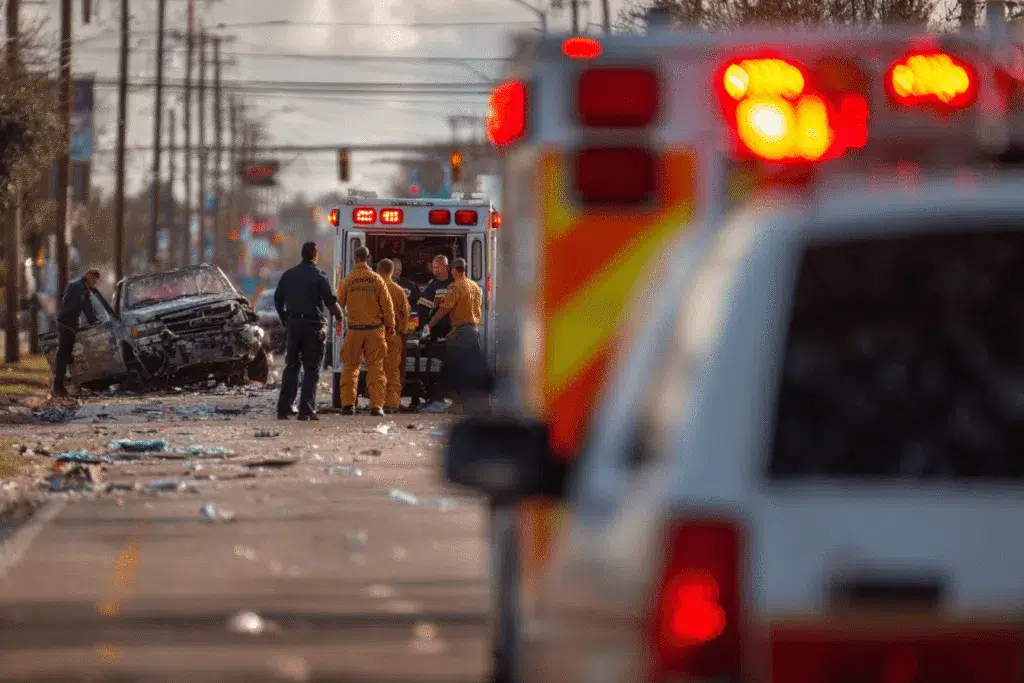
The most common types of car accidents in Fresno include rear-end collisions, intersection crashes, and sideswipe collisions. Multi-vehicle pileups frequently occur on Highway 99, while pedestrian crashes are common in busy commercial areas. These accidents often involve distracted driving, sudden stops, or failure to yield, leading to serious injuries and complex liability issues.
Car accidents in Fresno occur frequently on busy roads such as Highway 99, Blackstone Avenue, and Shaw Avenue, often leaving drivers confused, injured, and unsure what happened. Many collisions involve sudden stops, distracted drivers, or hazardous road conditions that can result in injury and costly vehicle damage. Understanding the common types of crashes can help you recognize how they happen and what to watch for after being involved in one.
Based on a study of motor vehicle accident cases we’ve resolved over the past 12 months, the most common types of car accidents in Fresno include rear-end collisions and intersection crashes, such as t-bone and left-turn accidents. We also frequently see sideswipe collisions, multi vehicle pileups on Highway 99, and pedestrian related crashes in busy commercial areas.
In this article, you will discover the most common types of car accidents in Fresno and how a car accident attorney can help protect your rights and pursue full compensation.
What Are the Most Common Types of Car Accidents in Fresno?
Car accidents in Fresno fall into several distinct categories. Each type has its own causes and typically points to a specific at-fault party. Knowing these differences helps you understand what evidence you need and who might be responsible for your injuries.
Here are the most common types of car accidents in Fresno, CA:
Rear-End Collisions
A rear-end collision occurs when one vehicle crashes into the back of another. This means the car behind you hits your car from behind, usually because they were following too closely or not paying attention.
These crashes are extremely common on Fresno’s stop-and-go traffic areas. Shaw Avenue during rush hour and the Highway 99 corridor see these accidents daily. The driver who hits you from behind is almost always considered at fault because they have a legal duty to maintain a safe following distance.
However, there are exceptions to this rule. If you suddenly slam on your brakes for no reason or your brake lights aren’t working, you might share some of the blame.
Side-Impact and T-Bone Collisions
A side-impact collision, also called a T-bone crash, occurs when the front of one car strikes the side of another car. This creates a “T” shape at the moment of impact, which is why it’s called a T-bone accident.
These accidents are particularly dangerous because your car’s doors and windows provide much less protection than the front or back. Most T-bone crashes happen at intersections when someone runs a red light or fails to yield the right-of-way.
The intersection of Blackstone Avenue and Shaw Avenue sees many of these severe crashes. The driver who violated the traffic signal or stop sign is usually at fault, but proving this requires witness statements or traffic camera footage.
Left-Turn and Right-of-Way Crashes
Left-turn accidents happen when a driver making a left turn crashes into oncoming traffic. Right-of-way means the legal right to go first in traffic situations, and left-turning drivers must yield this right to oncoming cars.
These crashes are common because drivers often misjudge how fast oncoming traffic is moving. The turning driver is usually at fault, but there are important exceptions.
If the oncoming driver was speeding excessively or ran a red light, they might be responsible instead. This is why evidence like traffic camera footage and witness statements becomes crucial for your case.
Head-On Collisions
Head-on collisions involve two vehicles traveling in opposite directions that crash head-on. These are among the most catastrophic types of accidents because the combined speed of the two vehicles generates enormous impact forces.
Most head-on crashes occur when a driver crosses the centerline, often due to falling asleep, driving under the influence, or distraction. Rural roads around Fresno, lacking median barriers, are particularly dangerous for these accidents.
The driver who crossed into oncoming traffic is almost always at fault. However, if poor road design or missing warning signs contributed to the crash, the government entity responsible for the road might also be liable.
Sideswipe and Merge Collisions
A sideswipe accident occurs when two vehicles traveling parallel to each other make contact along their sides. This typically happens during lane changes when a driver doesn’t check their blind spot or misjudges the distance to the vehicle ahead.
Highway 99 and CA-41 see frequent sideswipe accidents during heavy traffic. The driver who made the unsafe lane change is usually at fault.
Evidence like paint transfer on the vehicles and damage patterns helps determine which car moved into the other’s lane. Dashcam footage from either vehicle can provide clear proof of who caused the collision.
Multi-Vehicle Pileups
Multi-vehicle pileups are chain-reaction crashes involving three or more vehicles. These complex accidents often start with one collision that causes other drivers to crash while trying to avoid the initial wreck.
Fresno’s Tule fog creates extremely dangerous conditions for pileups on Highway 99. When visibility drops to just a few feet, drivers who don’t slow down appropriately can trigger massive chain reactions.
Determining fault in pileups is complicated because multiple drivers might share responsibility. Each driver’s speed, following distance, and reaction to the initial crash are examined separately.
Single-Vehicle and Run-Off-Road Crashes
Single-vehicle accidents involve only one car, such as hitting a tree, guardrail, or rolling over after leaving the roadway. While it might seem the driver is always at fault, that’s not necessarily true.
Poor road maintenance, debris in the roadway, or defective vehicle parts can cause these crashes. If a government entity failed to maintain the road properly, it might be liable for your injuries.
You have only six months to file a claim against a government entity in California. This tight deadline makes it crucial to investigate the cause of your crash quickly.
Pedestrian and Bicycle Collisions
Pedestrian and bicycle accidents involve vehicles striking people walking or riding bikes. These crashes cause devastating injuries because pedestrians and cyclists have no protection against a vehicle’s weight and speed.
California Vehicle Code Section 21950 requires drivers to yield the right-of-way to pedestrians in crosswalks. This means if you’re walking legally in a crosswalk, drivers must stop for you.
Downtown Fresno and areas near Fresno State see many of these accidents. Drivers often claim they didn’t see the pedestrian or cyclist, but this doesn’t excuse their legal responsibility to watch for vulnerable road users.
Motorcycle Collisions
Motorcycle accidents often happen because car drivers fail to see motorcyclists, especially during left turns. The most common scenario involves a car turning left in front of an oncoming motorcycle.
While lane-splitting is legal in California, it must be done safely. Motorcyclists who split lanes recklessly might share fault if an accident occurs.
The lack of protection makes motorcycle accidents particularly severe. Even minor crashes can cause serious injuries that require extensive medical treatment and long recovery periods.
Truck-Involved Crashes
Commercial truck accidents can involve several unique crash types that don’t happen with regular passenger vehicles:
- Jackknife accidents: The trailer swings around to form a 90-degree angle with the cab.
- Underride crashes: A smaller vehicle slides under the truck’s trailer.
- Rollover accidents: The truck tips over, often due to improper loading or taking curves too fast.
Liability in truck accidents can be complex. The driver, trucking company, cargo loader, or truck manufacturer might all share responsibility depending on what caused the crash.
Where Do Most Fresno Car Accidents Happen?
Certain locations in Fresno consistently see more accidents than others. Understanding these patterns helps explain why your accident happened and what evidence might be available.
The following areas are known accident hotspots based on local traffic reports:
- Highway 99: Multi-vehicle crashes and fog-related pileups.
- CA-41/Yosemite Freeway: Merge accidents and high-speed impacts.
- Blackstone and Shaw intersection: T-bone crashes and pedestrian strikes.
- Downtown Fresno: Parking-related accidents and pedestrian collisions.
Traffic cameras at major intersections sometimes capture accidents. Business security cameras from nearby gas stations, restaurants, and retail stores can also provide crucial footage.
What Causes These Fresno Collision Types?
Most car crashes in Fresno are caused by preventable driver errors. Understanding these causes helps establish who was negligent and strengthens your injury claim.
The primary causes include:
- Distracted driving: Texting, talking on phones, eating, or adjusting GPS systems.
- Driving under the influence: Alcohol or drugs that impair judgment and reaction time.
- Speeding: Exceeding posted limits or driving too fast for conditions.
- Aggressive driving: Tailgating, weaving through traffic, or running red lights.
- Weather conditions: Tule fog, reducing visibility to dangerous levels.
Each cause creates a different type of evidence trail. Cell phone records can prove distracted driving, while blood tests establish DUI. Speed can be determined from vehicle damage patterns and skid marks.
Who Is at Fault by Collision Type?
California uses a “pure comparative negligence” system. This means you can recover compensation even if you were partially at fault, but your award gets reduced by your percentage of blame.
Different accident types typically point to specific at-fault parties:
Rear-end collisions: The driver who hit you from behind is usually 100% at fault. Exceptions include sudden stops for no reason or non-functioning brake lights.
T-bone crashes: The driver who violated a traffic signal or stop sign is responsible. However, if the other driver was speeding excessively, fault might be shared.
Left-turn accidents: The turning driver is typically at fault unless the oncoming vehicle ran a red light or was speeding significantly over the limit.
Head-on collisions: The driver who crossed the centerline is almost always entirely responsible.
Understanding fault patterns helps you determine which evidence to preserve and which arguments insurance companies might make to reduce their payouts.
Evidence That Proves Fault in Fresno Crashes
Strong evidence is essential for proving the other driver’s negligence and securing fair compensation. You need to act quickly because crucial evidence can disappear within days of your accident.
Traffic and Business Cameras
Video footage provides the strongest evidence of how your accident happened. Intersection cameras capture traffic signal violations and impact angles that definitively prove fault.
Nearby businesses often have security cameras that record the surrounding streets. Gas stations, convenience stores, banks, and restaurants frequently have systems that capture accidents on adjacent roads.
This footage is often overwritten quickly, so it’s important to request preservation immediately. You or your attorney must send preservation letters immediately to prevent this evidence from disappearing.
Dashcams, TeslaCam, and EDR Data
Modern vehicles contain sophisticated recording systems that capture accident data. Dashcams record video of the crash, while Event Data Recorders (EDRs) store information about speed, braking, and steering inputs.
Tesla vehicles have built-in cameras that record continuously while driving. This TeslaCam footage can show exactly what happened from multiple angles around the vehicle.
EDR data requires special equipment to download and interpret. This “black box” information can prove whether a driver was speeding, braking, or steering at the time of impact.
Medical Documentation and Witnesses
Your medical records create a direct link between the accident and your injuries. Emergency room reports should document the “mechanism of injury” that explains how the crash caused your specific injuries.
Independent witness statements provide unbiased accounts of what happened. These witnesses have no financial interest in the outcome, making their testimony particularly valuable.
Getting witness contact information at the scene is crucial because people move away or forget details over time. Their statements can counter false claims made by the other driver or the insurance company.
Common Injuries by Crash Type
The way your accident happened often determines what injuries you suffer. Understanding these patterns helps explain your medical bills and treatment needs to insurance companies.
Rear-end collisions typically cause whiplash and other soft-tissue neck injuries. Sudden forward-and-backward motion strains the muscles and ligaments in your neck and upper back.
T-bone crashes frequently result in head trauma, broken ribs, and internal organ damage. The side impact can cause your head to strike the window while crushing your torso.
Head-on collisions commonly lead to traumatic brain injuries, spinal cord damage, and broken bones. The massive impact forces can cause life-threatening injuries.
Pedestrian accidents usually cause severe road rash, multiple fractures, and head injuries. The lack of protection makes even low-speed impacts dangerous.
Each injury type requires specific medical documentation to prove the connection between your accident and your ongoing health problems.
Related: Average Mild Traumatic Brain Injury Settlements in Fresno
What to Do After a Fresno Car Accident
The steps you take immediately after your accident can make or break your injury claim. Even if you’re hurt and shaken up, these actions protect your legal rights.
- Call 911 immediately: Request police and medical assistance even for seemingly minor accidents. The police report provides official documentation of what happened.
- Document everything: Take photos of vehicle damage, the accident scene, traffic signals, and any visible injuries. Video can capture details that photos miss.
- Exchange information: Get the other driver’s name, insurance company, policy number, and driver’s license number. Also, collect contact information from any witnesses.
- Seek medical attention: Get examined by a doctor the same day, even if you feel fine. Some serious injuries don’t show symptoms immediately.
- Preserve evidence: Don’t repair your vehicle until your attorney or insurance company documents the damage. Save the clothes you were wearing.
- Contact an attorney: Speak with a personal injury attorney specializing in car accident cases before giving recorded statements to insurance companies. They often use these statements against you later.
How Long Do You Have to File a Claim?
California law sets strict deadlines for filing different types of claims after a car accident. Missing these deadlines can cost you the right to compensation entirely.
- Personal injury claims: You must file a lawsuit for your injuries within two years of the accident date. This deadline applies to most car accident cases.
- Property damage claims: You havethree years to file a lawsuit for vehicle damage and other property losses.
- Government entity claims: If a city, county, or state government is responsible, you mustfile a formal claim within six months. This shortened deadline catches many people off guard.
Evidence disappears, and witnesses forget details over time. Starting your claim promptly protects your rights and preserves crucial evidence of the other driver’s fault.
Find Out How Much Your Car Accident Claim is Worth
After a serious crash, one of the most important questions is whether any settlement offer truly reflects the full impact of your injuries. Insurance companies often calculate claims based on immediate expenses, not long-term medical care, lost earning capacity, or the lasting effect on your daily life. Accepting an offer too early can permanently limit your recovery.
A proper case evaluation considers every category of damage—medical bills, future treatment, missed income, reduced earning potential, property loss, and pain and suffering. It also accounts for liability disputes and how comparative fault laws may affect your compensation.
Understanding the true value of your claim requires careful review of medical records, accident evidence, and insurance coverage limits.
Contact us today to schedule your free consultation to review your case, assess your potential recovery, and make informed decisions about your next steps.
Fresno Car Accident Types Frequently Asked Questions
Which Type of Car Accident Causes the Most Severe Injuries in Fresno?
Head-on collisions and T-bone crashes typically cause the most severe injuries because of the massive impact forces involved. Pedestrian and motorcycle accidents also result in catastrophic injuries due to the lack of protection for the victims.
Can Weather Conditions Like Tule Fog Affect Who Is at Fault for My Accident?
Drivers have a legal duty to adjust their driving for weather conditions, including slowing down in fog. A driver who causes an accident by driving too fast for the conditions is still considered negligent under California law.
What Should I Do if the Other Driver’s Insurance Company Contacts Me After My Fresno Accident?
You should politely decline to give a recorded statement and refer them to your attorney. Insurance adjusters often use these early statements to minimize your claim before you fully understand your injuries and their long-term effects.
Final Thoughts
Car accidents in Fresno take many forms, but rear-end crashes, intersection collisions, sideswipes, multi-vehicle pileups, and pedestrian accidents remain among the most common. Each type of crash presents unique risks, injury patterns, and liability challenges. What may initially seem straightforward can quickly become complicated when fault is disputed or injuries worsen over time.
Understanding how these accidents typically occur helps you recognize warning signs, seek timely medical care, and avoid common mistakes when dealing with insurance companies. Early documentation of injuries, vehicle damage, and crash details can significantly impact the outcome of your claim.
If you were injured in any type of car accident in Fresno, protecting your legal rights should be a priority. An experienced car accident attorney can investigate the crash, determine liability, and pursue compensation for medical expenses, lost wages, and other damages. Taking informed action now can help safeguard your recovery and financial stability moving forward.