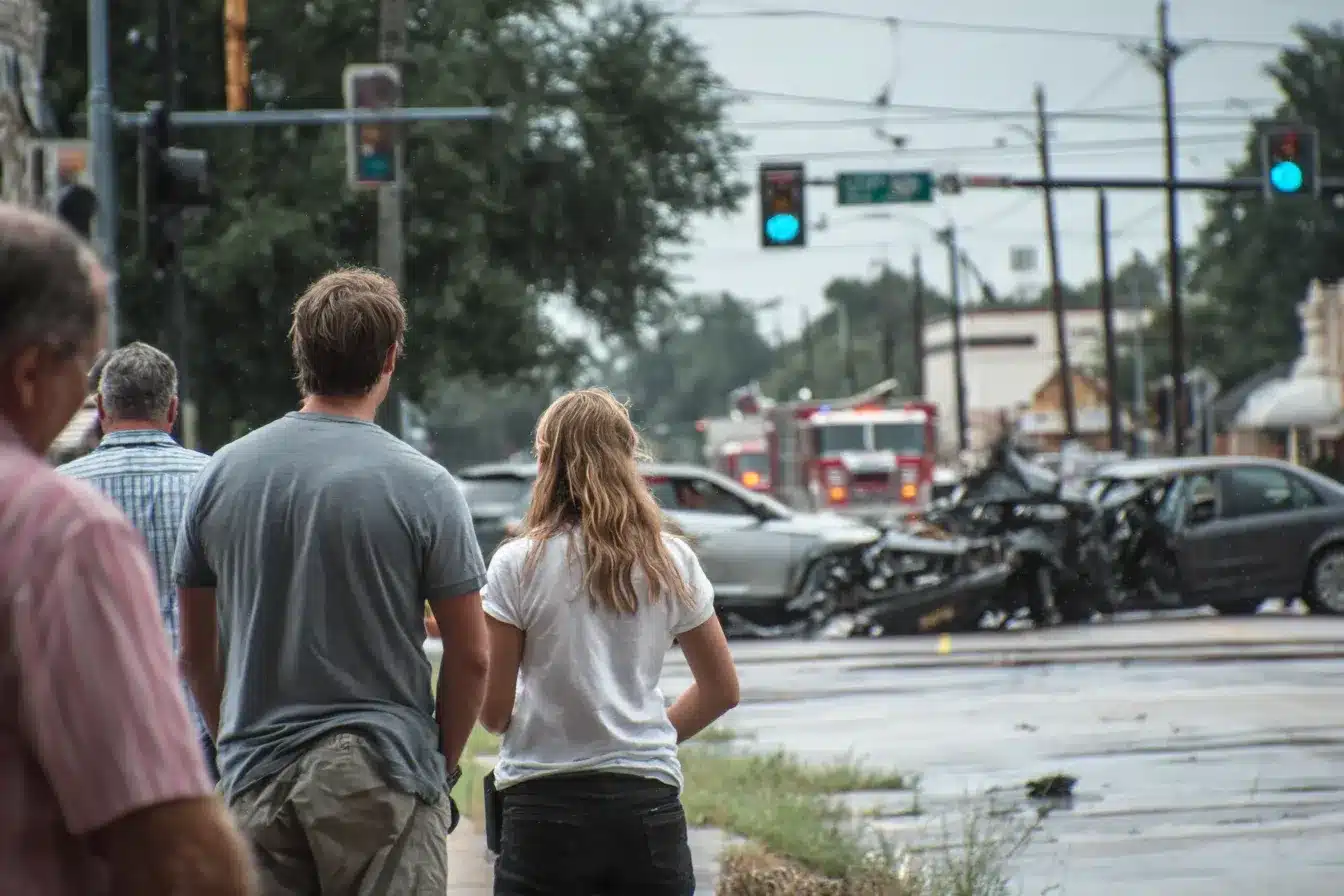
In California, T-bone fault typically falls on the driver who failed to yield, ran a red light, or ignored a stop sign, though shared fault is common. California’s comparative negligence rules mean insurers will work to assign you a portion of the blame to reduce what they owe. Establishing clear liability requires evidence gathered quickly after the crash.
T-bone collisions in California produce some of the most severe injuries of any crash type because the side of a vehicle offers far less protection than the front or rear. Busy intersections across the state, from Lancaster’s Avenue K crossings to Fresno’s Blackstone Avenue corridor, see these side-impact crashes regularly, often caused by distracted drivers, red light runners, and failure to yield. Victims are left with broken bones, spinal injuries, and traumatic brain injuries while insurers immediately begin disputing who had the right of way.
The challenge is that T-bone accident liability in California is rarely clear-cut. Multiple drivers, road conditions, signal timing, and witness accounts all factor into how fault is assigned. California’s comparative negligence system allows insurers to reduce your compensation by whatever percentage of fault they can attribute to you, making the investigation and evidence-gathering that follows a crash critically important.
In this article, you will discover how fault is determined in California T-bone accidents, how comparative negligence affects your compensation, and how a California car accident attorney can build the evidence needed to protect your claim and pursue full recovery.
What Is a T-Bone Accident?
A T-bone accident is when the front of one car crashes directly into the side of another, forming a “T” shape at the point of impact. These crashes are also called side-impact or broadside collisions. They most often happen at intersections, in parking lots, or when a driver pulls out of a driveway into moving traffic.
T-bone crashes are particularly dangerous because the sides of a vehicle offer very little protection. Unlike the front or rear, there are no large crumple zones to absorb the force, which puts anyone sitting on the struck side at serious risk of injury.
T-Bone Accident Liability: Who Is at Fault in a California T-Bone Accident?
In California, fault is determined based on negligence. Fault in a T-bone accident comes down to one core question: who violated the other driver’s right of way? The driver who caused the crash by failing to yield, running a light, or driving recklessly is typically the one held responsible. Fault is based on negligence, which simply means a person failed to use the care that a reasonable driver would have used to avoid causing harm.
That said, fault is not always simple. Multiple parties can share responsibility, and in some cases, the at-fault party is not even one of the drivers involved.
Traffic Signals and Stop Signs
Running a red light or blowing through a stop sign is the most common cause of T-bone crashes. The driver who enters an intersection illegally is almost always found to be at fault. A police citation issued at the scene is strong early evidence that supports your claim.
Left Turns and Failure to Yield
A driver making a left turn must yield to all oncoming traffic before turning. If they turn without enough space and cause a collision, they are typically held liable. The only exception is if the oncoming driver was also acting negligently, such as speeding through a red light.
Speeding, Distraction, and Impaired Driving
Dangerous driving behaviors can create or shift fault in a T-bone case:
- Distracted driving: A driver who was texting and failed to see cross-traffic can be held fully liable.
- Speeding: A driver going well above the speed limit may share fault even if they technically had the right of way.
- Impaired driving: A driver under the influence of alcohol or drugs who causes a crash may face punitive damages, which are extra damages a court can award to punish especially reckless behavior.
Multi-Vehicle and Phantom Drivers
Sometimes the person who caused a T-bone crash never even touches your car. Imagine a driver makes an illegal lane change, forcing another vehicle to swerve into an intersection where it T-bones you. That first driver who started the chain reaction can still be held legally responsible, even though there was no direct contact with your vehicle.
Vehicle Defects and Manufacturer Liability
If a mechanical failure caused the crash, the fault may lie with the vehicle’s manufacturer or a repair shop. Defective brakes, a blown tire, or a failing steering system can all lead to a product liability claim against the company responsible for that defect.
Dangerous Road Conditions and Government Liability
A city, county, or state can be held responsible if a dangerous road condition contributed to the crash. This includes a broken traffic light, a missing stop sign, or an intersection with blocked sightlines. If a government entity is involved, you have only six months to file a formal claim, which is much shorter than the standard deadline for injury lawsuits.
How California’s Comparative Negligence Rule Affects Your T-Bone Accident Claim
California follows a rule called pure comparative negligence. This means you can still recover money even if you were partly at fault for the accident. Your compensation is simply reduced by your percentage of blame.
For example, your total recovery would be reduced to reflect your percentage of fault. Insurance companies often try to push your fault percentage higher than it should be so they can pay you less. We push back with evidence to protect your recovery.
Common ways insurers try to assign you partial fault include:
- Driving through a yellow light: They may argue you should have stopped, even if you legally had the right to proceed.
- Failing to take evasive action: They may claim you had time to brake or swerve, even when the crash happened in a fraction of a second.
- Being distracted: If there is any suggestion that you were not fully focused, they will use it to reduce what they owe you.
What Evidence Proves Fault in a T-Bone Crash?
The position of the cars after a crash does not tell the full story on its own. You need clear, documented evidence to prove who was actually at fault. The sooner evidence is gathered, the stronger your case will be.
Police Reports and Witness Statements
A police report documents driver statements, a diagram of the crash, and any citations issued at the scene. Independent witnesses are especially valuable because they have no stake in the outcome and can provide an honest account of what they saw.
Traffic Camera and Dashcam Footage
Video is often the most powerful evidence in a T-bone case. A traffic camera, a nearby business’s security system, or another driver’s dashcam can show exactly who had the green light. This footage is often deleted within days, so acting quickly to preserve it is critical.
Vehicle Black Box Data
Most modern cars have an Event Data Recorder (EDR), commonly called a black box. This device captures speed, braking force, and steering inputs in the seconds before a crash. We sent a legal preservation notice to prevent this data from being erased before we can access it.
Crash Reconstruction Experts
In disputed cases, we bring in accident reconstruction specialists. These experts analyze skid marks, vehicle damage patterns, and debris fields to scientifically determine how the collision happened and who was responsible.
What Compensation Can You Recover After a T-Bone Accident?
California law allows you to seek compensation for both the financial and personal harm caused by the crash. The value of your claim depends on the severity of your injuries, your total losses, and the insurance coverage available.
Economic damages cover your direct financial losses:
- Medical bills, surgeries, emergency care, and physical therapy
- Future treatment costs if your injuries require ongoing care
- Lost wages for time you could not work during recovery
- Reduced earning capacity if a permanent injury limits your ability to work in the future
- Vehicle repair or replacement and rental car costs
Non-economic damages cover harm that does not come with a receipt:
- Physical pain and the emotional toll of dealing with a serious injury
- Scarring, disfigurement, or permanent physical limitations
- Loss of enjoyment of activities you could do before the crash
If a loved one was killed in a T-bone accident, surviving family members may file a wrongful death claim to recover funeral costs, lost financial support, and compensation for the loss of that person’s love and guidance.
What to Do After a T-Bone Accident
What you do in the hours after a crash can protect both your health and your legal right to compensation.
- Call 911 and get medical care. Even if you feel fine, see a doctor the same day. Injuries like concussions and internal bleeding may not produce immediate symptoms, and a medical record from the day of the crash connects your injuries directly to the accident.
- Document the scene. Take photos of the vehicle positions, traffic signals, skid marks, and any visible injuries. Collect names and phone numbers from any witnesses.
- Do not give a recorded statement. The other driver’s insurance adjuster will likely call you within days. You can simply say, “I am not ready to give a recorded statement, please contact my attorney.” Recorded statements are often used to minimize what the insurer pays you.
- Call Kuzyk Law Personal Injury & Car Accidents Lawyers. We handle the insurance companies, preserve the evidence, and manage the legal process so you can focus on getting better. You pay nothing unless we win.
What If the Other Driver Has No Insurance?
If the at-fault driver has no insurance or not enough coverage to pay for your damages, you may still have options through your own policy.
| Coverage Type | Who Pays | When It Applies |
| At-fault driver’s liability | Their insurer | Standard claims |
| Uninsured Motorist (UM) | Your insurer | At-fault driver has no insurance |
| Underinsured Motorist (UIM) | Your insurer | At-fault driver’s policy is too small |
We help you navigate your own insurance policy to make sure you receive every dollar of coverage you are entitled to.
Why Kuzyk Law Personal Injury & Car Accidents Lawyers Fights for T-Bone Victims
Kuzyk Law Personal Injury & Car Accidents Lawyers has represented clients across California for decades and recovered substantial compensation on their behalf. Many of our clients come to us through referrals, reflecting the trust they place in our firm.
We prepare every case as if it is going to trial. That preparation tells insurance companies we will not accept a lowball offer. When insurers refuse to settle fairly, we take cases to verdict and have obtained substantial favorable outcomes for our clients.
You pay no fees unless we win. Contact Kuzyk Law Personal Injury & Car Accidents Lawyers today for a free case review.
Frequently Asked Questions
Is the Driver Who Hits the Side of Another Car Always at Fault?
Not always. The driver who strikes the side of another vehicle is often at fault, but if the driver who was hit ran a red light or pulled out unsafely, they could be found partially or fully responsible.
How Long Do You Have to File a T-Bone Accident Lawsuit in California?
You generally have two years from the date of the accident to file a personal injury lawsuit. If a government entity is involved, you have only six months to file a formal claim.
Can You Still Recover Compensation if You Were Partly at Fault in a T-Bone Crash?
Yes. California’s pure comparative negligence rule allows you to recover damages even if you share some of the blame. Your total compensation is reduced by your percentage of fault, but you are not barred from recovery.
What Happens to Your Claim if the At-Fault Driver Fled the Scene?
If the at-fault driver fled, it is treated as a hit-and-run. In most cases, you can file a claim under your own Uninsured Motorist coverage to recover compensation for your injuries and vehicle damage.
What Evidence Best Proves Who Had the Green Light in a T-Bone Accident?
Traffic camera footage, dashcam video, and statements from independent witnesses are the strongest forms of proof. This evidence must be preserved quickly before it is deleted or overwritten.