A sixth-degree burn is the most severe type of burn, extending through all layers of the skin and underlying tissue into muscle, tendons, and bone. These burns cause total tissue destruction and often result in loss of the affected limb. They are life-threatening, require immediate medical attention, and almost always involve surgical removal or amputation.
A sixth-degree burn is considered a catastrophic injury. These burns are often fatal and usually occur in extreme situations such as explosions, electrical accidents, or industrial fires.
Survivors face lifelong medical care, amputation, and disability. When such an injury results from another party’s negligence, whether an unsafe workplace, defective product, or preventable fire, a catastrophic injury attorney can pursue compensation for medical expenses, lost income, and pain and suffering.
Understanding the nature of these burns and the legal options available is essential for victims and their families.
This article explains what sixth-degree burns are, how they differ from other burn classifications, what causes them, and how a burn injury attorney with experience handling catastrophic injury cases can help you seek compensation and justice.

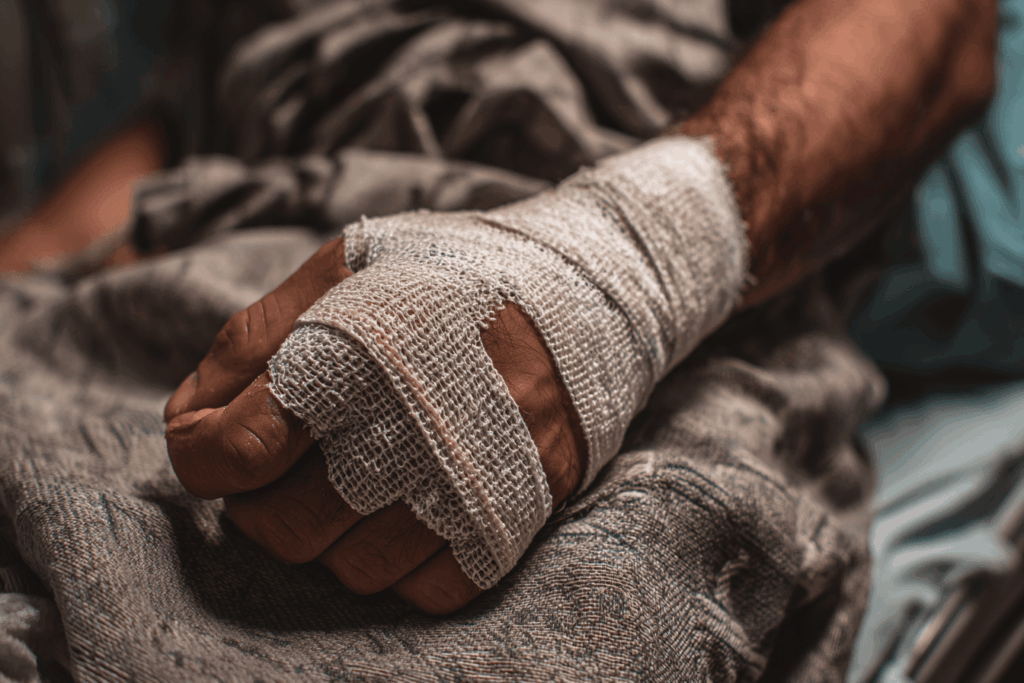
What Does a Sixth-Degree Burn Look Like?
A sixth-degree burn looks entirely different from any other burn you might see. The burned area is totally black and dry, like charcoal. You can actually see the bone through the destroyed skin and muscle, and even the bone is burned black.
Unlike less serious burns that might bleed or have blisters, a sixth-degree burn is completely dry. This happens because the extreme heat has destroyed all the blood vessels and turned the tissue into something resembling ash.
The key things that make a sixth-degree burn different include:
- Complete blackening: Every part of the tissue from skin to muscle is charred black
- Visible bone: You can see the skeleton through the destroyed tissue, and it’s also burned
- No bleeding or pain: All blood vessels and nerves are completely destroyed
- Surrounding damage: The most severe burn is usually surrounded by other serious burns
Doctors often can only confirm a sixth-degree burn during an autopsy because people rarely survive them. When someone is still alive, doctors look at how deep the burn injury goes and how much of your body it covers to decide on treatment.
How Do Burn Degrees Work?
Burns are ranked by how deep they go into your body. Each degree means the burn went deeper and destroyed more of your tissue. Think of it like layers of an onion—each burn degree goes through another layer.
Here’s how the different burn degrees compare:
| Burn Degree | What Gets Burned | What It Looks Like | Does It Hurt? |
| First | Just the top skin | Red and dry like sunburn | Yes, very much |
| Second | Top two skin layers | Blisters and wet-looking | Extremely painful |
| Third | All skin layers | White or brown, leathery | No pain (nerves dead) |
| Fourth | Into the fat under skin | Charred and dry | No pain |
| Fifth | Into the muscle | Exposed muscle visible | No pain |
| Sixth | All the way to bone | The bone is charred black | No pain |
The higher the degree number, the more your body is destroyed. A first-degree burn heals in about a week, but a sixth-degree burn means your body’s basic structure is ruined beyond repair.
What Causes Sixth-Degree Burns?
Sixth-degree burns only happen when something is extremely hot for a long time. The heat has to be intense enough to burn through everything in your body down to the bone and actually char the bone itself.
These terrible injuries usually happen in specific, tragic situations:
- House fires where people get trapped: When you can’t escape a burning building and are exposed to flames for too long
- Car crashes with explosions: When gasoline catches fire after a severe accident and creates intense heat
- Factory accidents: Molten metal, chemical explosions, or other industrial hazards that create extreme temperatures
- Electrical accidents: High-voltage power lines or electrical equipment that can instantly superheat your body
- Clothing fires: When your clothes catch fire and you can’t put them out quickly enough
You’re more likely to suffer burns this severe if you’re unconscious, trapped somewhere, or can’t move well enough to get away from the heat source.
Can You Survive a Sixth-Degree Burn?
Surviving a sixth-degree burn is almost impossible. If the burn covers your chest, head, or multiple limbs, it’s always fatal. Your body simply can’t handle that much damage.
The only people who have ever survived had very specific circumstances:
- The burn was on just one arm or leg: Not on the main part of the body
- Doctors amputate the burned limb immediately: Usually within hours of the injury
- They got to a specialized burn hospital fast: Most hospitals can’t handle injuries this severe
Even in these best-case scenarios, most people still die. The burns cause your body to go into shock, lose too much fluid, become overwhelmed by infections, and experience organ failure from all the toxins released by the destroyed tissue.
How Are Sixth-Degree Burns Different From Fifth-Degree Burns?
The difference between fifth- and sixth-degree burns is what happens to your bone. A fifth-degree burn goes through your skin, fat, and muscle but stops there. Your bone underneath remains normal.
A sixth-degree burn goes to that extra devastating step. It burns through the muscle and actually chars your bone, turning it black and destroying it too.
Both types of burns are life-threatening and usually mean doctors have to amputate the burned body part. But sixth-degree burns give you almost no chance of survival unless the burn is very small and in just one spot.
What Should You Do If Someone Suffers a Severe Burn in California?
If you see someone get severely burned, what you do right away can make a huge difference. But remember, your safety comes first—don’t put yourself in danger.
Here’s what you need to do immediately:
- Call 911 right away: Tell them it’s a severe burn and ask them to take the person to a hospital with a burn unit if possible
- Don’t try to treat the burn yourself: Don’t put anything on it, don’t use ice, and don’t try to remove clothing that’s stuck to the burn
- Keep the person warm: Cover them with a clean, dry blanket to prevent shock
- Take pictures if it’s safe: Document what caused the burn and the scene around it
- Save any evidence: Keep any damaged products, equipment, or other items that might have caused the accident
After the medical emergency is handled, you need to protect your legal rights. Don’t sign anything from insurance companies or give them recorded statements without talking to a lawyer first. In California, you usually have two years to file a lawsuit, but evidence disappears quickly.
Who Can Be Held Liable for Catastrophic Burn Injuries?
When someone else’s carelessness or wrongdoing causes a severe burn, they can be held responsible for the damages. Figuring out who’s at fault is crucial for getting you the compensation you deserve.
The people or companies who might be responsible include:
- Property owners: If bad wiring, missing smoke detectors, or building code violations caused a fire
- Employers: When unsafe working conditions or lack of safety equipment lead to workplace burns
- Product makers: For defective items like faulty appliances, electronics, or cars that catch fire
- Careless drivers: Who cause car accidents that result in vehicle fires
- Government agencies: That fail to maintain things like gas lines that could explode
California law lets you recover money even if you were partly at fault for what happened. An experienced lawyer can investigate your case and figure out who should pay for your injuries.
What Compensation Is Available for Burn Victims and Families?
The costs of a catastrophic burn injury are enormous, both financially and emotionally. A personal injury claim seeks to recover compensation to cover all these losses.
If you survive a severe burn, you might be able to recover money for:
- All your medical bills: Including future surgeries, therapy, and long-term care you’ll need
- Money you can’t earn: Both wages you’ve already lost and money you won’t be able to make in the future
- Pain and suffering: Compensation for the physical and emotional trauma you’ve endured
- Scars and disfigurement: Money for how the burns have changed your appearance and affected your life
When burns are fatal, the victim’s family can file a wrongful death lawsuit. This lets them seek compensation for their own losses:
- Funeral and burial costs: The immediate expenses of laying their loved one to rest
- Lost financial support: The money the deceased would have provided to the family
- Loss of companionship: Compensation for losing their relationship with the deceased
Insurance companies often fight these claims hard, trying to pay as little as possible. Having an experienced lawyer on your side ensures you get the full compensation you deserve.
California Laws That Affect Burn Injury Cases
California has specific laws that affect burn injury cases. Understanding these rules is important for protecting your rights and getting fair compensation.
The state follows a “pure comparative negligence” rule. This means you can still get money even if you were partially at fault for the accident. For example, if you were 20% responsible and the other party was 80% responsible, you would recover 80% of your total damages.
You generally have two years from the date of your injury to file a lawsuit in California. This is called the statute of limitations. If you miss this deadline, you lose your right to sue forever, even if you have a strong case.
If your case involves a government agency, you must file a special claim within six months of the injury. This is much shorter than the normal deadline and has strict requirements.
Why Burn Injury Cases Are Complex
Burn injury cases are some of the most complicated personal injury claims. They require extensive investigation, multiple experts, and detailed medical evidence to prove what happened and how much compensation you deserve.
The challenges in these cases include:
- Proving what caused the fire: This often requires fire investigators, electrical experts, and other specialists
- Documenting the full extent of injuries: Burn injuries often require lifelong medical care that’s hard to predict
- Calculating future costs: Medical expenses, lost wages, and care needs can continue for decades
- Dealing with multiple insurance companies: Different parties might have different insurance policies that all need to be pursued
Insurance companies know these cases are complex and often try to take advantage of victims who don’t have legal help. They might offer quick, low settlements before you understand the full extent of your injuries and future needs.
The Importance of Acting Quickly
Time is critical in burn injury cases. Evidence disappears, witnesses forget what they saw, and important documents get lost or destroyed.
The sooner you contact a lawyer, the better your chances of building a strong case. Early legal action helps:
- Preserve crucial evidence: Photos of the scene, damaged products, and witness statements
- Prevent evidence destruction: Companies might throw away important documents if they’re not legally required to keep them
- Document your injuries properly: Medical records created right after the accident are often the most important
- Protect your legal rights: Insurance companies can’t take advantage of you if you have legal representation
Don’t wait to get help. The shock and trauma of a severe burn can make it hard to think clearly about legal issues, but waiting too long can hurt your case.
Contact Kuzyk Law Personal Injury & Car Accident Lawyers Today
If you or a loved one has suffered a catastrophic burn injury in California, you don’t have to face this devastating situation alone. At Kuzyk Law Personal Injury & Car Accident Lawyers, we understand the immense physical, emotional, and financial challenges you’re facing.
We’ve been fighting for injured victims and their families throughout Lancaster, Fresno, Bakersfield, and all of California for decades. Our experienced team knows how to handle the most complex burn injury cases and get the compensation you need to rebuild your life.
Here’s what we offer:
- No upfront costs: We work on a contingency fee basis, so you pay nothing unless we win your case
- 24/7 availability: We’re here to support you whenever you need us most
- Bilingual services: We provide help in both English and Spanish
- Proven results: Our track record shows we get results for our clients
Don’t let insurance companies take advantage of you during this difficult time. Contact us today for a free, no-pressure consultation. The sooner you call, the sooner we can start protecting your rights and fighting for the justice you deserve.
Sixth-Degree Burn FAQs
Can Anyone Actually Survive a Sixth-Degree Burn to Their Torso or Head?
No, sixth-degree burns to the main body or head are always fatal. The only documented survivors had burns limited to a single arm or leg that was immediately amputated. Burns this severe to vital areas cause too much damage for the body to survive.
Do Sixth-Degree Burns Cause Excruciating Pain at the Burn Site?
The actual sixth-degree burn site feels no pain because all nerve endings are completely destroyed. However, victims experience severe pain from the surrounding second- and third-degree burns that typically accompany the deepest injury. The overall trauma is still extremely painful.
What’s the Difference Between a Sixth-Degree Burn and Being Burned to Death?
A sixth-degree burn is a medical classification based on tissue damage depth, while being burned to death refers to the cause of death. Someone can die from less severe burns due to complications like infection or shock, while theoretically someone could survive a localized sixth-degree burn with immediate amputation.